
What Happened To Free Public Wi-Fi In Downtown Traverse City?
By Craig Manning | Dec. 7, 2025
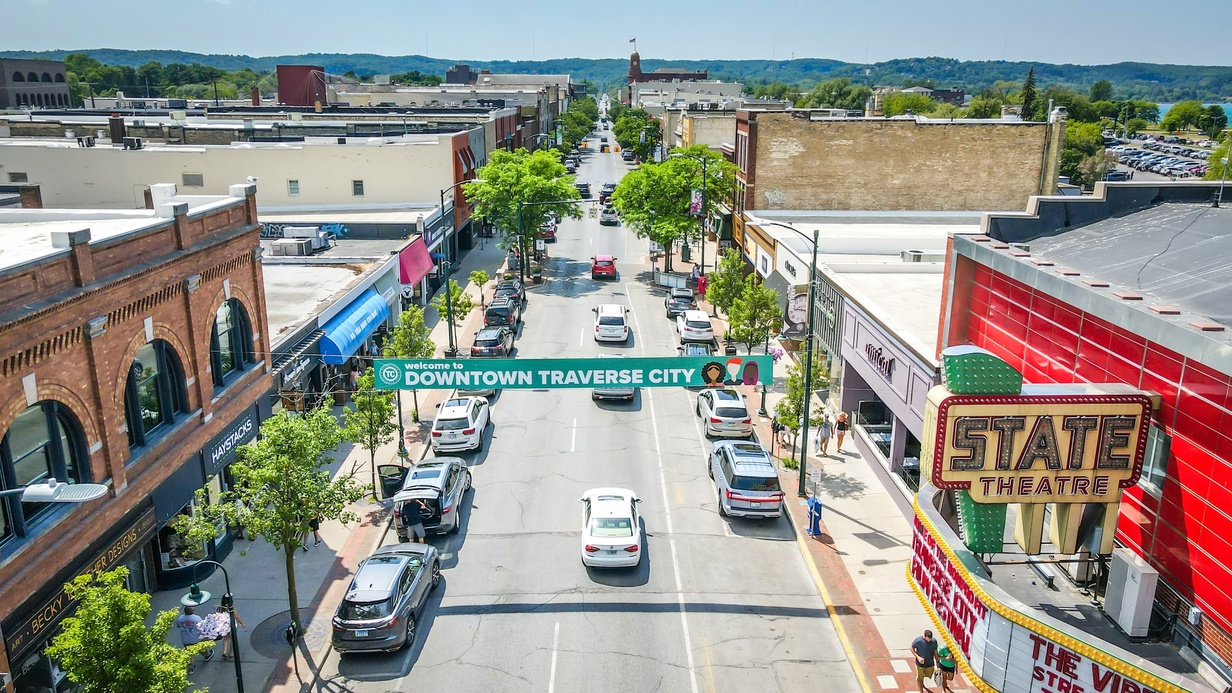
Eleven years ago, Traverse City Light & Power (TCLP) and the Downtown Development Authority (DDA) teamed up to build a free public wi-fi system in downtown Traverse City. Fast-forward to 2025, and the network is a thing of the past. What happened to the program, and could it ever be revived? The Ticker investigates.
First, some history: In 2014, after years of conversation about the potential for public wi-fi, TCLP and the DDA inked a 10-year agreement to roll out free wireless internet access in the downtown area. TCLP put up $790,000 in upfront costs to build out the network. The DDA, meanwhile, agreed to pay TCLP back over time using funds from two tax increment financing (TIF) districts: TIF 2, which had been adopted in 1985 with the goal of redeveloping the former TC Ironworks site; and TIF 97, adopted in 1997 to build a parking deck.
With TIF 2 set to expire in 2016, the DDA frontloaded its payments to the TCLP with a $275,000 lump sum during the 2014-15 fiscal year, paid with money from both TIF funds. The remaining annual payments, each $65,000, were made using TIF 97 dollars, with the DDA making the final payment in 2024.
According to contemporaneous reporting from The Ticker, the network was designed to provide free wi-fi access to people walking around downtown Traverse City or spending time at the Open Space, accommodating up to 27,500 outdoor users simultaneously. A memo from Rob Bacigalupi, then the DDA’s executive director, noted that wi-fi had become a “basic utility” in other downtowns, “just like lights and running water,” and that adding the service to downtown Traverse City was crucial for everything from helping customers avoid data charges to “promoting events and possibly even businesses downtown.” Traverse City attorney John DiGiacomo, then a DDA board member, also touted the potential for the network to serve as a foundation for other tech upgrades, including security cameras and trash can sensors “to collect data and figure out when to schedule pick-ups.”
Free public wi-fi officially went live downtown 11 years ago this month.
During the years when it was operational, the reputation for the downtown network was poor. When The Ticker last reported on the public wi-fi system in May 2019, our Facebook comments section offered a snapshot of the program’s public perception: “I don’t ever turn the wi-fi on because its performance is dismal at best,” one reader wrote; “I ALWAYS turn off the wi-fi downtown because it is absolutely terrible,” another added.
“The feedback I’ve had is it’s not working as well as it should,” Jean Derenzy, then the DDA’s CEO, told DDA board members at their April 2019 meeting. “We’re working with TCLP to identify how that can improve.” At the time, Derenzy was working on a business plan for how downtown could “use [wi-fi] as a better platform” to accomplish downtown goals – a plan that included potential network upgrades like paying for more bandwidth or installing additional radio nodes.
For their part, TCLP representatives insisted to The Ticker at the time that the wi-fi system was working as intended, with Chief Information Officer Scott Menhart noting that the majority of complaints came from people trying to use public wi-fi inside local stores, restaurants, or hotels.
“They’re not getting any speed inside because it was never intended to be used inside a business like that,” Menhart said, clarifying that the network had been built exclusively for outdoor use.
Public misconceptions or not, significant improvements to the network never happened, and as of 2025, the system has been phased out. The Ticker reached out to TCLP Executive Director Brandie Ekren and DDA CEO Harry Burkholder to find out what happened, and whether the program could ever resurface.
“The public downtown wi-fi system was installed more than 10 years ago, and the equipment has long exceeded its useful life,” Ekren and Burkholder told The Ticker in a joint written statement. “Over time, as more downtown businesses began offering wi-fi and cellular service quality improved, community reliance on the public system declined significantly.”
“The decision not to replace the aging equipment was made prior to both of us stepping into our current roles, and the system gradually fell offline as the equipment reached the end of its useful life,” the pair added. “While we are not certain of the exact timing of that decision, we can confirm that it was based on declining usage and available alternatives in the downtown area. The DDA has not received recent complaints or requests regarding public wi-fi, which further indicated minimal reliance on the system.”
Still, Ekren and Burkholder aren’t ruling out the possibility of public wi-fi returning to downtown TC someday.
“For decisions like this, both organizations use their annual capital investment planning processes,” the duo wrote. “Cross-agency collaboration…helps us identify public needs and determine how best to prioritize limited funding. As we look ahead, we will continue those discussions to understand what level of connectivity is most appropriate and sustainable for the downtown district.”
Comment

What Happened To Free Public Wi-Fi In Downtown Traverse City?
Read More >>Grawn Man Arrested for Domestic Violence
Read More >>City to Explore Boardman Lake Plan w/Garfield Township, Housing Incentives
Read More >>K-Town Youth Health Center Closing
Read More >>



GT County Updates: Airport Bonds, Planning Contracts, Body Art Rules & Project Alpha
Read More >>Grand Traverse County Treasurer’s Office Suspends Passport Services
Read More >>Snow Many Gifts: Ladies' and Men’s Night By The Numbers
Read More >>New HUD Policy Could Take Northern Michigan's Homelessness Response System 'Back Decades'
Read More >>Join Us for Recess of Giving Wednesday at TC Phil!
Read More >>Distillery Ups and Downs of 2025
Read More >>