
City to Dig Into Governance, Strategic Plan
By Beth Milligan | Jan. 10, 2026
Traverse City commissioners will have back-to-back study sessions today (Saturday) and Monday that will shape how they work together and with staff in the coming year. The first, a facilitated retreat from 9am to 1pm today at the Traverse City Senior Center, will cover topics including governance, trust, communication styles, and shared agreements. Monday’s 7pm meeting at the Governmental Center will include a presentation from consultant David Buerle of Future iQ on the city’s strategic action plan, with commissioners working to set clear implementation goals from that plan.
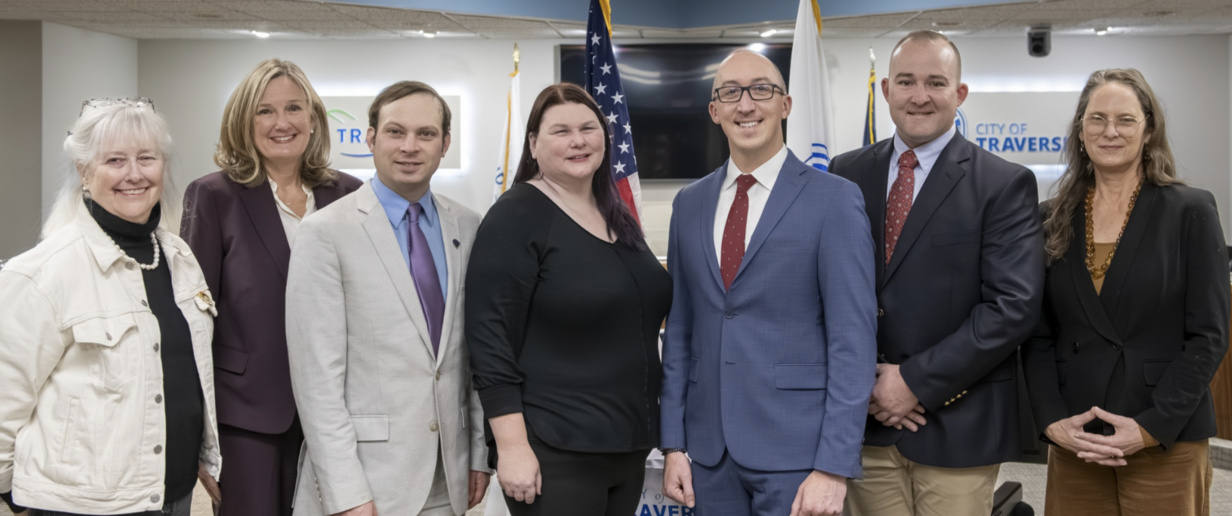
City Manager Benjamin Marentette says today’s retreat – which is open to the public – is intended to help commissioners and staff “recalibrate” how they operate as a team. Going offsite can help get boards out of their usual rut and “inspires more creativity,” Marentette says. The commission, which includes several newly elected members in November, is coming off a difficult period that has included a rotating door of city managers – plus turnover in other key positions – as well recurring commission tensions in recent years.
Executive coach and consultant Lucille Chrisman will be leading the retreat with support from Becky Ewing. Handouts provided to commissioners at the study session will be published on the city’s website for “transparency purposes,” according to Marentette. Topics will include “governance versus management” – clarifying the roles and responsibilities of both commissioners and staff – as well as trust as a “foundation for effective governance.”
The facilitators will also help commissioners discuss their various communications styles and how those impact collaboration. The session will end with commissioners creating a first draft of “shared agreements,” or written commitments on how board members and staff plan to work together. “We’re going for candor as we talk about these different topics,” says Marentette, acknowledging that doing so – particularly at a public meeting – will require “vulnerability” from the participants.
Marentette says the retreat is the first in a series of sessions planned with commissioners. Another will follow in February during a Monday night meeting at the Governmental Center (date TBD). Marentette, who received praise in recent performance reviews for helping improve communications and morale within city government, says there’s still work to be done with commissioners and staff to “co-create” a productive work environment.
Commissioners will meet for a second study session Monday with David Buerle of Future iQ, who recently led the city through a public process to create a strategic action plan. The plan – created after multiple community surveys, think tanks, visioning sessions, stakeholder meetings, and focus groups – lists six strategic “pillars” or focus areas. Each of those areas supports a 2035 vision of an “equitable and sustainable” Traverse City, with key actions steps listed under each pillar. Pillars include “Proactively Manage Urban Design,” “Strengthening Placemaking and Neighborhood Character,” “Building Thriving Year-Round Economy,” “Supporting Environmental Sustainability,” “Fostering a Regional Collaborative Approach,” and “Building Socio-Economic Systems and Amenities.”
Commissioners voted this summer to extend their contract with Future iQ to “translate this strategic action plan to align with city commission objectives and key results,” according to a memo from Assistant City Manager Deb Allen. OKRs, as those are collectively called, will be the focus of Monday’s meeting and will convert priorities in the plan into “clear, measurable outcomes for city decision-making, resource allocation, and organizational performance,” according to Marentette.
Future iQ is also meeting in parallel with city department heads to get their input on the OKRs, which will help ensure they’re “both strategically grounded and operationally realistic,” Marentette says. Once finalized, the OKRs will come back for city commission approval and provide a “clear north star that connects community priorities, commission direction, and city operations,” according to the city manager.
Marentette tells The Ticker staff plan to “embrace those OKRs” as they prepare the upcoming 2026-27 budget. The city starts its fiscal year July 1, so commissioners and staff typically work on the budget for several months in the late winter/spring before the board adopts it in June. While unexpected or last-minute issues often arise in city government, Marentette believes the strategic action plan and the OKRs are crucial to help commissioners and staff “stay focused and deliver results” for residents. For the plan to have credibility, he says, “there has to be transparency on progress” – including a public dashboard that’s planned to track efforts.
City officials are also expected to receive clarification on the difference between the strategic action plan and the city’s master plan. That has become a recent sticking point for the city planning commission, which has experienced tense arguments after Commissioner Jackie Anderson – who sits on the planning commission – has asked for more consideration of the strategic action plan in that board’s decision-making. Other planning commissioners, however, have argued they are legally bound to only consider the master plan and focus exclusively on issues of zoning and land use, not larger city strategic priorities. Planning commissioners voted unanimously this week to ask City Attorney Lauren Trible-Laucht to prepare a legal memo clarifying the relationship between the strategic action plan and the master plan.
Comment

National Writers Series Announces 2026 Winter/Spring Season
Read More >>City to Dig Into Governance, Strategic Plan
Read More >>The Return of Blackwood: New Development Planned for Grawn
Read More >>Yarrow Brown Becomes ED at Generations Ahead; Housing North Looks for New Leader
Read More >>



Commissioners Talk ARPA Projects, 2026 Committees/Schedule, Elk Rapids Dam
Read More >>NMC Rolls Out Outstanding Alumni List In Celebration Of 75th Anniversary
Read More >>What’s The Latest On Planned North+South Rail Project?
Read More >>Riparian Buffer Ordinance, Zoning Rewrite, Public Outreach Among 2026 City Planning Goals
Read More >>Carnegie/Bijou RFP, Parking Projects, City Clerk Appointment Top City Agenda
Read More >>Past to Present: The Newcomers (Really Condensed) Guide to Traverse City
Read More >>