
Riparian Buffer Ordinance, Zoning Rewrite, Public Outreach Among 2026 City Planning Goals
By Beth Milligan | Jan. 6, 2026
At their first meeting of the year tonight (Tuesday), Traverse City planning commissioners will discuss several goals for 2026 – including finishing a long-discussed riparian buffer ordinance, rewriting and reorganizing the city’s zoning ordinance, and improving public communications. Planning commissioners, who will meet at 6pm at the Governmental Center, will also elect new officers and complete an annual bylaw review.
Several board goals for 2026 will carry over from 2025, most notably finishing a new riparian buffer ordinance. Riparian properties are those with “frontage on an inland lake, river, stream, or Great Lakes,” according to the city’s website. “Riparian buffer is the naturalized area upland of the water’s edge, ordinary high-water mark (OHWM) of a lake, or edge of the streambank or riverbank.”
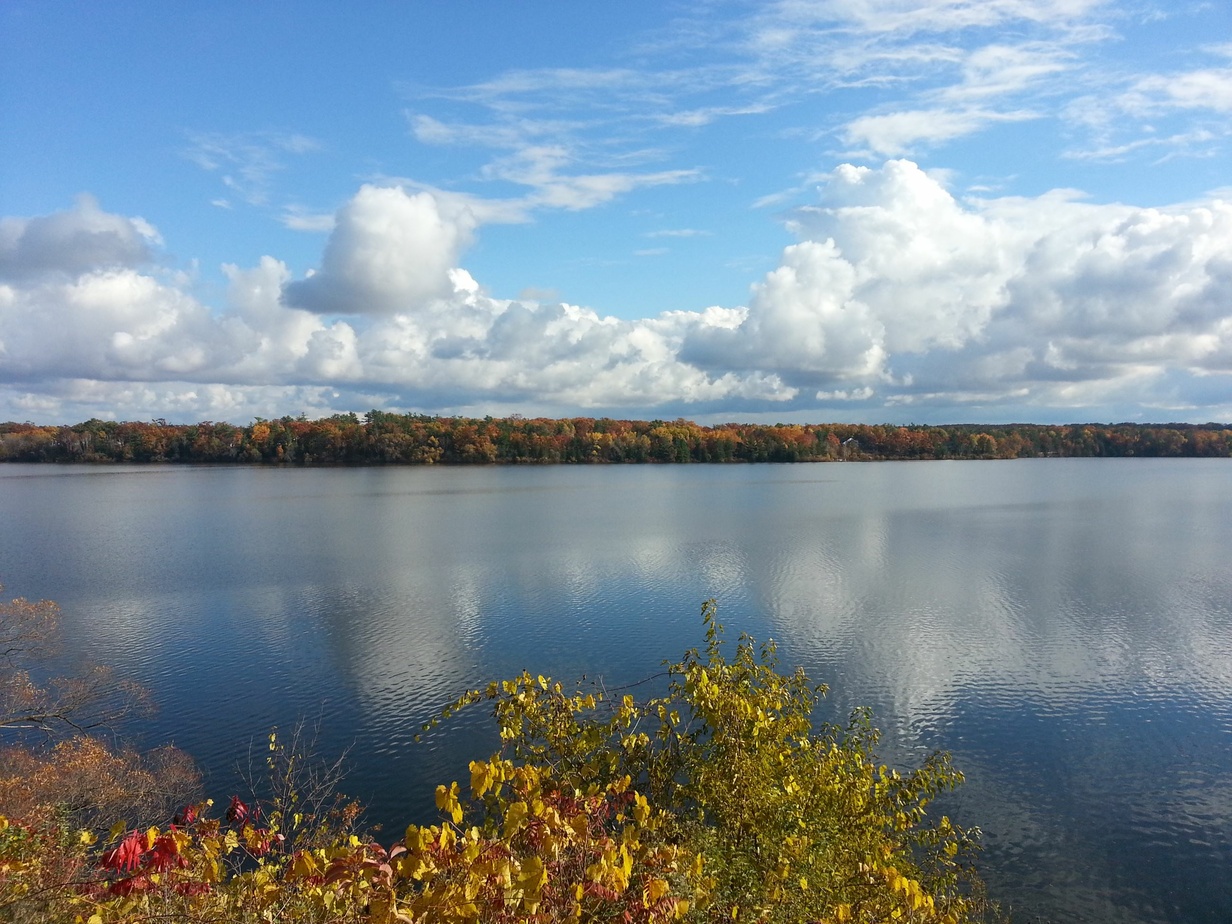
Development activities within the buffer zone can “impact these fragile systems,” so regulating such activities can help improve water quality, protect the environment, preserve erosion banks, and promote flood resilience, the website states. Introducing rules for sensitive areas like Kids Creek, Grand Traverse Bay, the Boardman/Ottaway River, and Boardman Lake (pictured) has been a city goal for several years, including in 2025.
City Deputy Planning Director/Sustainability Coordinator Leslie Sickterman says the ordinance has “many nuances to it” including different impacts on different types of properties, so finishing it has been “a lot more complicated than it might seem on the surface.” However, a draft is ready and will be reviewed in the first quarter by both the riparian buffer committee and planning commission before it’s posted for public input and ultimately heads to city commissioners for approval.
“We just want to make sure we get it right, and everyone’s on board with it,” Sickterman says. “We want to make sure people understand what the rules are that would be in play.” She cites as an example not storing snow piles within a certain distance of the water. The city’s GIS department is helping create an interactive map to accompany the ordinance showing what the buffer zone and rules would look like for various properties.
Planning Commission Chair Debbie Hershey says she’s confident the riparian buffer ordinance will be completed this year. Other goals, however, are likely to start this year but continue into 2027 and beyond. The biggest of those is rewriting and reorganizing the city’s zoning ordinance. “This came up the last year because of a couple things that came before us where we realized there are inconsistences in the zoning ordinance, because it has changed a lot over the years,” Hershey says. “There’s also language in there that’s up for interpretation.”
Examples include requirements that properties be “unique” to qualify for a planned unit development – an issue that came up during a proposed redevelopment of the former Traverse Bay United Methodist Church site on Ramsdell Street – and vaguely worded stipulations for building exteriors, which prompted extensive debate during approval of a new Front Street hotel. Clarifying unclear definitions and any areas of confusion in the zoning ordinance will help both the public and city officials, according to Sickterman and Hershey.
“The idea with the full rewrite is to make it more user-friendly and straightforward,” Sickterman says. “There’s a lot of repetition and referencing back and forth between things. I find it hard myself to find things. The goal is to make it more concise and easier to use.” Hershey says a rewrite is “not just for us but for future commissioners, so they can make clear decisions.”
Rewriting a zoning ordinance is a lengthy process than can often take 18-24 months to complete, according to Hershey. The rewrite could incorporate new standards called for in the city’s recently completed master plan, along with other city goals. Examples include creating rules for electric vehicle infrastructure, rezoning West Front Street from west of Pine to Division, exploring building standards for new commercial development, reviewing setback and drive-thru standards, assessing daycare rules to expand childcare options, developing preapproved plan sets (pattern books), and establishing a development zone along Fourteenth Street.
Improving communications is another goal carrying over from 2025 that planning commissioners and staff hope to continue in 2026. Hershey says part of the challenge is that planning commissioners are not allowed to respond to public comment in meetings. Offering explanations or addressing confusion when residents are upset during meetings can thus be difficult, she says. “How do we include more people in the process and make it easier for them to come to us and ask questions rather than coming angry to meetings?” Hershey says. “If they could come to office hours with a concern, we can show them maps or the zoning ordinance and have a dialogue.”
Planning commissioners and staff have begun hosting monthly public office hours with that exact goal in mind. The first one in 2026 is scheduled for Wednesday, January 14 at 6pm at Tank Space on Eighth Street. The sessions will continue monthly thereafter and are posted on the city’s website. Other communication goals this year include having more joint city commission and planning commission meetings on topics of shared concern, better advertising public hearings, and creating a development dashboard “to publicly track new development progress,” according to a memo from Sickterman.
Comment

NMC Rolls Out Outstanding Alumni List In Celebration Of 75th Anniversary
Read More >>What’s The Latest On Planned North+South Rail Project?
Read More >>Riparian Buffer Ordinance, Zoning Rewrite, Public Outreach Among 2026 City Planning Goals
Read More >>TCBN: Mountains of Data, Cyberattacks and AI
Read More >>



Lockdown Lifted at Munson After Threat; No Active Shooter
Read More >>Exploring Year-Round Farmers Markets
Read More >>Carnegie/Bijou RFP, Parking Projects, City Clerk Appointment Top City Agenda
Read More >>Past to Present: The Newcomers (Really Condensed) Guide to Traverse City
Read More >>Last Looks At 2025: The Year's Most Eye-Popping Numbers, From Airport Traffic To Food Insecurity
Read More >>Traverse City’s Most Violent Year? Crime Stories Dominate The Ticker’s 2025 Top 8
Read More >>