
What Became Of Traverse City's 10,000-Item Historical Collection?
By Karl Klockars | Dec. 11, 2022
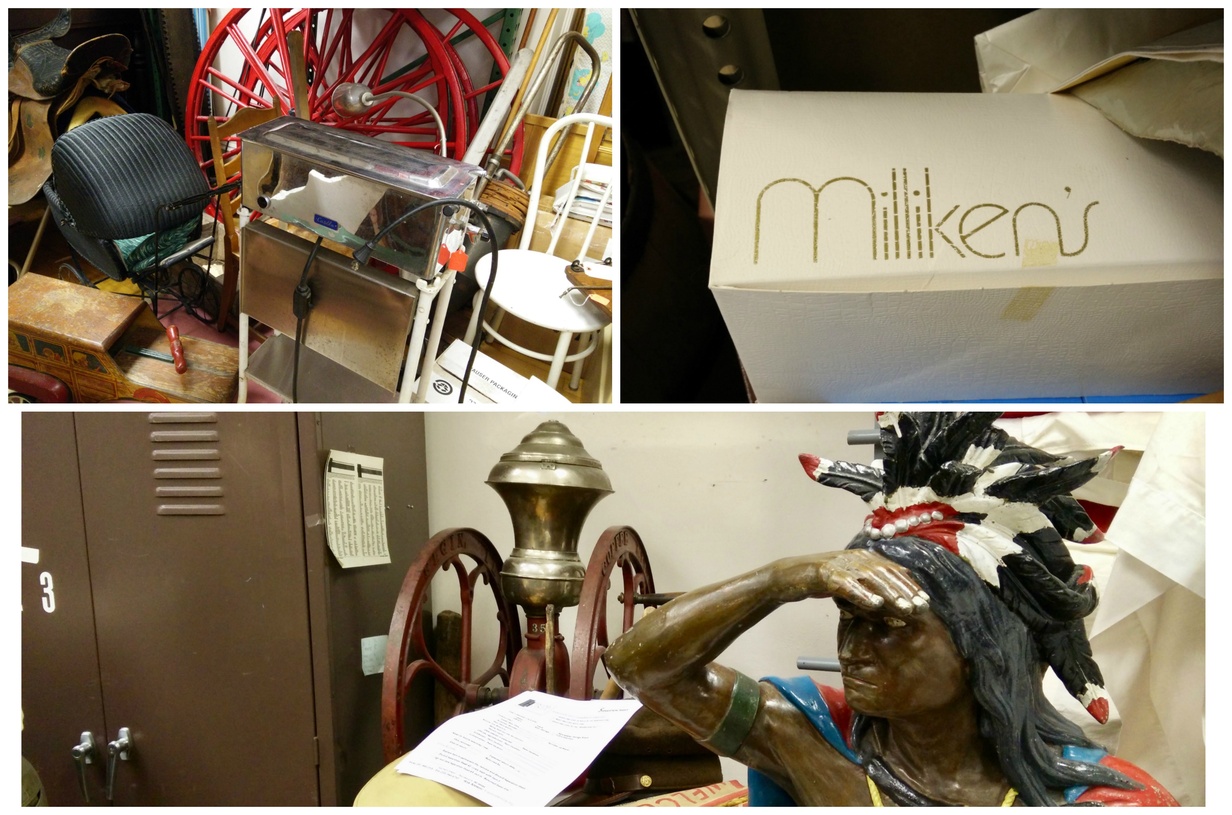
For nearly a decade, the Con Foster Collection—the 10,000-item collection of objects from Traverse City’s history — has been locked behind the closed doors of a handful of storage spaces around the area. And two-and-a-half years after officials last said they were determined to resolve the collection's future or potentially find it a permanent home, are we any closer to that reality?
The collection was started in the mid-1930s by Con Foster, a Traverse City resident who traveled throughout the midwest acquiring items with a focus on Native American and pioneer relics. Foster commissioned the Works Progress Administration (WPA) to build a museum in Clinch Park to display the items (that building is now the Bijou by the Bay Theater.)
The original collection started with Foster’s artifacts, and was reportedly inspired by Foster’s association with P.T. Barnum in the 1910s. But over the years it continued to grow as pieces of Traverse City’s history accumulated around the original items. City founder Perry Hannah’s stovepipe hat, a variety of antique firearms and a vintage WTCM neon sign are often cited as some of the most high-profile items in the collection, but they haven’t been seen in years since the History Center closed its space at the Carnegie Building in 2014.
Penny Hill took on her role as Assistant City Manager in 2014 and has been the point person for the collection for about as long as it’s been without a home.
“It’s in a good area for storage - it’s secure, there’s fire suppression and environmental controls and everything,” she says. Even though it’s under lock and key, don’t think you can ask nicely and get a peek at the collection, however. “Once in a while we’ll get a request, but we have not allowed anybody to access it.”
The first step toward making the collection public again began with making sure that some of the items went back to where they truly belonged: members of the Native American tribes around the country.
As part of the process to be in compliance with the Native American Graves Protection and Repatriation Act (NAGPRA), a website for the collection “was established for the purposes of expediting consultation with the Native American tribes,” Hill says, which she says has been in place for about four years. It’s a private website only available via invitation, and only represents the Native American portion of the collection.
“If different tribal representatives wanted to view Native American objects that could be subject to NAGPRA then they contact me, I give them access to a collection and then they can comment” on the items, which according to a 2015 report prepared by consultants for the city, did contain “human remains representing two individuals” at the time.
When the site launched, Hill says that they reached out to all the tribes in the U.S. by mail, and while this version of the online collection hasn’t been utilized much recently, initially there was a lot of interest. “At first we had quite a few [requests to view], and I would say within the last two years, I have had only one request,” Hill says.
Recently a new contractor has been engaged by the city to create a full inventory and condition assessment of every item in the collection. That project is just getting underway, which Hill says will be “a minimum two year process,” after which the City Commission will decide what next steps to take.
“It is a long process. Every item has to be looked at, all the paperwork has to be found, everything has to be entered into the database, photos have to be taken, that sort of thing,” Hill says. That detailed process is why requests to view the collection are now refused: to make sure that no part of the collection gets moved or disorganized during the inventory.
As for a future virtual or physical museum, “that is going to be something that is probably much further down the road. It'll be part of a bigger discussion once the inventory project is finished. The City Commission is going to have [to have] a discussion about the future of the museum: whether or not to have a physical museum, whether or not to have a virtual museum,” Hill says.
“But until the inventory project is finished, it's hard to have that discussion because our database is only partially completed. So we want to make sure that the City Commission knows exactly what's there.” And whenever this discussion takes place, the collection needs to be aligned with the existing policy and mission statement of the Museum, which was established in 1984.
Comment
Beyond Juicery, New Boutiques Opening in TC; More Restaurant, Retail News
Read More >>Airport Board Meetings Ready For Public Viewing
Read More >>Tensions at Road Commission Over South Airport Contract, Communications
Read More >>Summer Housing Prices Soar, Up 88 Percent Since 2019
Read More >>


Temporary New Location for City Parking Services
Read More >>New BlueTech Accelerator Drives Startups to Freshwater Research Center
Read More >>Community Group Strives to Save Central High School Gym
Read More >>City Announces Safety Plan for Hull Park
Read More >>California Dreamin’ at Cherry Capital Airport
Read More >>TVC Lands Air Service Conference
Read More >>