County Eyes Spring Groundbreaking on LaFranier Expansion
By Beth Milligan | Feb. 18, 2026
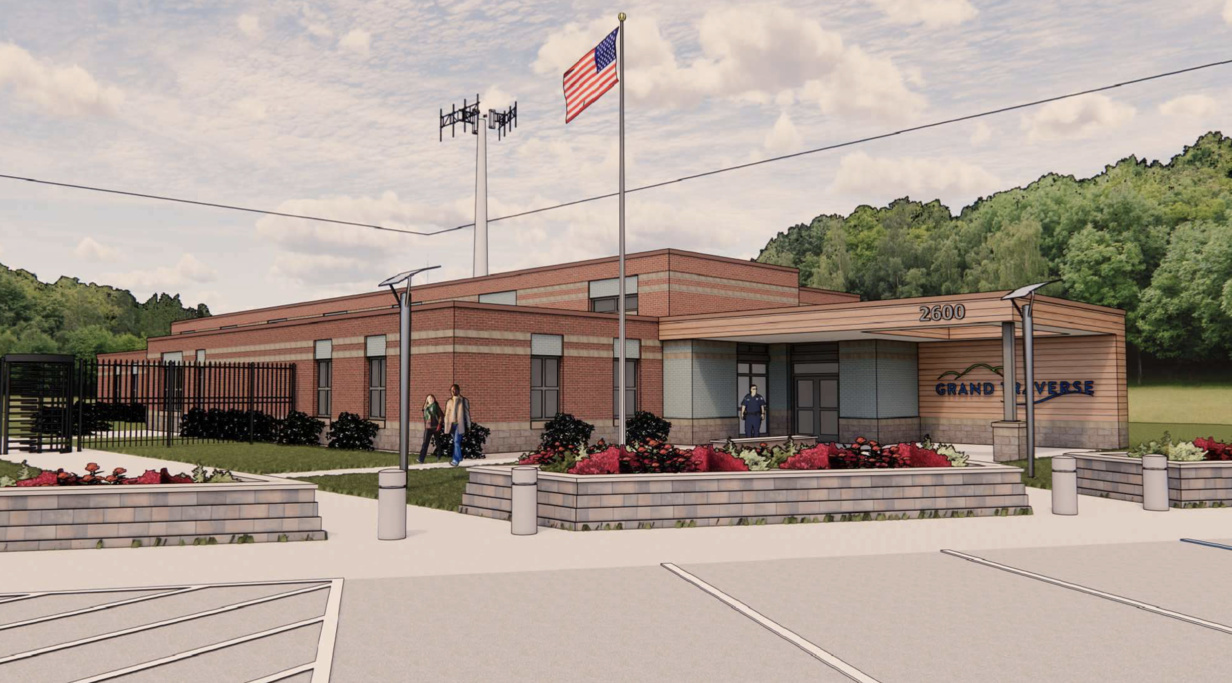
Grand Traverse County commissioners will vote today (Wednesday) to proceed with construction on Project Alpha, an expansion of the county’s LaFranier Road campus to include a new combined emergency operations and 911/Central Dispatch center and a central operations building for multiple county departments. Construction is planned to begin this spring and be complete in 2027. Commissioners will also vote today on approving multiple technology upgrades for emergency services.
Project Alpha
After two years of planning, county commissioners could give the green light today to proceed with construction on Project Alpha.
Project manager Cunningham-Limp will provide an update on the estimated $27-$28.6 million expansion of the LaFranier Road campus. Plans call for building a 13,500-square-foot combined emergency communications/operations center and a 38,000-square-foot central operations building. The latter will provide storage and operational space for multiple county departments, including facilities management. Commissioners voted in December to add solar panels to both buildings and to install an on-site well that can be used for irrigation and backup potable water if public water goes down.
The board will vote today on approving the first of two contract agreements with Cunningham-Limp to serve as construction manager. The next step will be for Cunningham-Limp to gather pre-bid information and return to the board’s March 18 meeting with a maximum guaranteed price for the project, County Administrator Nate Alger tells The Ticker. If commissioners are comfortable with that price, they’ll approve the final contractual documents to proceed.
Commissioners must also finalize their funding approach to Project Alpha. The board previously discussed scenarios that included putting up to $13 million in county funds toward construction and bonding the rest. However, commissioners must make the final call on the county’s cash-to-debt ratio. Alger says commissioners will discuss that topic at either their March 11 study session or at the March 18 meeting with Cunningham-Limp.
Once commissioners approve their bonding approach, the county must issue a public notice of its intent to issue bonds. That gives voters a 45-day period in which they can file referendum petitions calling for an election before the bonds can be issued. If the referendum period passes with no petitions filed, the county can proceed with bonding. While the county hopes to break ground on Project Alpha in April, Alger says the bonding notice process and other factors could push that to May.
Access to the construction site will come off LaFranier and potentially also from Garfield depending on ongoing negotiations with DTE about gas line easements running through the property, Alger says. While existing departments on the LaFranier campus – like the Health Department – will likely have to deal with some noise and other typical impacts from construction over the next year, their traffic flows and parking should not be disrupted, according to Alger.
Emergency Services Tech
Commissioners today will also consider approving two contracts for technology upgrades related to emergency services. The first is a contract for just under $360,000 for 911/Central Dispatch to replace its 911 phone system. According to a memo from Central Dispatch Director Corey LeCureux, a “more modern phone system is required to meet the challenges presented by call volume and changing technological standards. The current system is a shared hosted solution that has created a myriad of malfunctions.”
The department used a request-for-proposals (RFP) process to find a Next Generation 911 system that could offer multimedia capabilities – able to provide support voice, text, and video support – as well as “advanced cybersecurity” and “geographic flexibility.” The company Ryzyliant Edge 911 was one of four vendors that bid on the proposal and scored the highest in evaluations. LeCureux noted the 911 phone system upgrade is not budgeted and thus is proposed to be covered by contingency funds, with an estimated annual recurring cost after the purchase of just over $72,000.
Commissioners will also vote to approve a request from emergency management to switch the county’s emergency notification and alert system from CodeRED by Crisis24 to HQE Systems. Emergency Management Coordinator Gregg Bird said the county has experienced several “critical issues” with CodeRED following an upgrade to its new platform in October. Those include “numerous software glitches” and message failures that have remained unanswered or fixed. Bird also wrote that “CodeRED personnel inadvertently overwrote our current database with outdated information from one year prior, resulting in loss of updated resident data.”
Those issues “represent significant operational risks to our emergency communication capabilities and public safety mission,” Bird said. HQE Systems is only slightly more expensive at a cost of $24,814 per year than CodeRED at $23,000, according to Bird, with the 2026 budget for the emergency alert system set at $25,500. The transition therefore remains within budget, according to Bird’s memo.
Comment

Downtown Businesses on the Move, Plus More Retail & Restaurant News
Read More >>TCAPS To Rename Traverse City Central High School Track Facility In Honor Of Longtime Coach John Lober
Read More >>Garfield Township to Consider Apartment Complex, Food Truck Ordinance, Wireless Tower
Read More >>NMC Breaking Ground This Week On Geothermal Project
Read More >>



GT County Updates: Building Projects, Crisis Center, Treasurer’s Office
Read More >>City Commissioners to Tackle New Budget, Shared Agreements, Deputy City Manager’s Departure
Read More >>National Parks at the Center of Debate Over How to Tell America's Story
Read More >>Ashley Ochoa's Bringing Nutrition, Comfort To Cancer Patients
Read More >>Hickory Hills Day Camp Registration Opens May 13
Read More >>Modern Bird Opening Bakery in Former Mary’s Space; Bay Bread Opening New Location in Hagerty Cafe
Read More >>