
How Green Does Traverse City Want to Be?
By Craig Manning | May 6, 2019
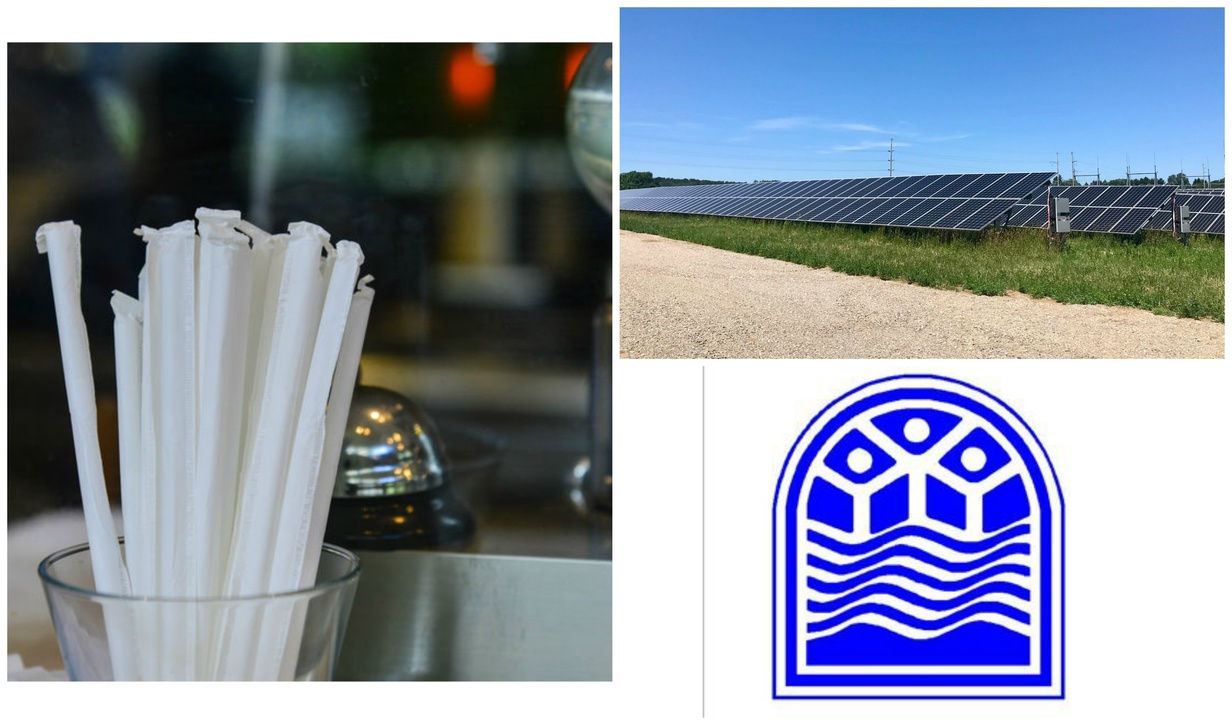
Almost 10 years ago, the City of Traverse City adopted a resolution dubbed “Take Back the Tap,” vowing to stop purchasing bottled water “for use in City of Traverse City facilities or at City of Traverse City of events.” Since then, the city has taken numerous steps to increase its sustainability – even going so far as to set a goal of powering 100 percent of city operations with renewable energy by the end of next year. But as cities and states around the country adopt new legislation aimed at curbing waste, The Ticker is asking: How green does Traverse City want to be?
In March, news broke that New York was adopting a ban on single-use plastic bags. Included in the state’s 2020 budget deal, the ban will make New York the second state to ban the types of plastic bags often used in grocery stores, restaurants, and retail. California implemented the first ban in 2014. Cities like Chicago and Portland have taken another approach, instituting taxes on plastic bags.
Plastic straws are also a target. Since January, full-service California restaurants have been legally prohibited from giving out plastic straws to customers who don’t ask for them. Companies like Disney, United Airlines, and Starbucks have implemented their own internal bans.
In Michigan, the future of these types of policies is uncertain – at least on a legislative level. In 2016, Michigan lawmakers passed a bill that bars communities from implementing local laws or ordinances to ban single-use plastic bags. The law preempted a then-recently-passed Washtenaw County ordinance that would have required a 10-cent tax on paper and plastic bags. While Traverse City has never had a formal ban on single-use plastic bags, the city did adopt a resolution in September 2008 that encouraged local businesses “to reduce or eliminate the use of plastic bags in their establishments.”
Right around Earth Day, legislators in the Michigan House of Representatives introduced House Bill 4500, aimed at repealing the 2016 ban on bans. If passed, House Bill 4500 would allow local communities throughout Michigan to enforce the matter of single-use plastic bags as they see fit.
In the meantime, many Traverse City businesses and organizations have taken matters into their own hands. Businesses like Amical, Red Mesa Grill, and Oryana have traded plastic straws for more eco-friendly, compostable options. The Grand Traverse Resort and Spa formed a “Green Committee,” which has introduced a “request-only” model for plastic straws at Resort restaurants and plans on rolling out compostable straws soon.
Other businesses are going one step beyond: Higher Grounds doesn’t use disposable cups, opting instead to serve customers their coffee in ceramic mugs. The coffee shop collects mugs on a donation basis and gives customers the option of keeping their mugs or returning them to the shop when they finish their coffee.
Andy Gale, president and general manager of Bay Area Recycling for Charities (BARC), says his sales figures for compostable products have increased from $12,000 in 2012 to roughly $500,000 last year. BARC gets its compostables from a company called Green Safe Products, offering a catalog of everything from straws to cups to to-go containers. Many of these products are made from plant-based materials, like corn, sugarcane, and even potatoes. Rather than utilizing the parts of those plants that are used for food, compostable companies purchase stalks and other crop byproducts that haven’t historically had practical applications.
“These are the leftovers,” Gale says. “We’re learning how to utilize those other parts of the plant that would normally go to the wayside.”
In addition to selling compostable materials, BARC also offers a composting service as one of its recycling offerings. Clients include Munson, the Great Wolf Lodge, Grand Traverse Resort and Spa, Northwestern Michigan College, Oryana, several area restaurants, and a few summertime festivals and events. The service is so in-demand that BARC has temporarily stopped offering it to new clients. Gale says the “capital-intense” nature of the composting process makes the service difficult to expand. BARC is currently seeking a $500,000 Michigan Department of Environmental Quality grant to help pay for new equipment and allow the composting service to grow.
Advocates say compostable materials are only marginally more expensive than regular plastics and note that -- even in a landfill -- they break down in 1-6 months versus up to 1,000 years for some plastics.
And, Gale says, “people are conscientious. If they see you’re being wasteful with something, they’re going to let you know.”
Comment

City Eyes Major Boardman/Washington/Cass/State Project
Read More >>Annual TC Patriot Game Set for Friday at Thirlby Field
Read More >>NMC Lands $630,000 Grant from the State
Read More >>Prowling Ordinance, Attainable Housing District Headed to Commission Vote
Read More >>



Local Clerks Debunk Voting Misinformation
Read More >>Candidates Square Off In 103rd State House Race
Read More >>Traverse City Central's New 'Ride Lab' Uses Skateboards to Teach Physics, Business Skills
Read More >>Garfield Township Approves South Airport Sewer Work, Townline Rezoning, Trail Projects
Read More >>TC Man Faces Felony Charge for Threatening to Kill Prosecutor
Read More >>County to Consider North Sky Lease; Funding Allocations to Support County Services
Read More >>