
Past to Present: The Newcomers (Really Condensed) Guide to Traverse City
By Kierstin Gunsberg | Jan. 4, 2026
Quick, what’s your go-to Taco House order? If that question stumped you, you’re probably one of many who’ve recently landed in the area. And if you’re feeling a little out of the loop, here’s a non-exhaustive guide to the major players, institutions of bygones past, and everyday Traverse City lore that’ll have you up to speed in no time.
Before everything and everyone else, there was the Anishinaabe.
You don’t have to go far to find a piece of public art here. And some of the most iconic pieces, like the 19 colorful murals installed in Clinch Park’s pedestrian tunnel in 2019, honor the history of our region’s First Peoples, the Anishinaabe who have inhabited northern Michigan for thousands of millennia before tourists began lining the beaches.
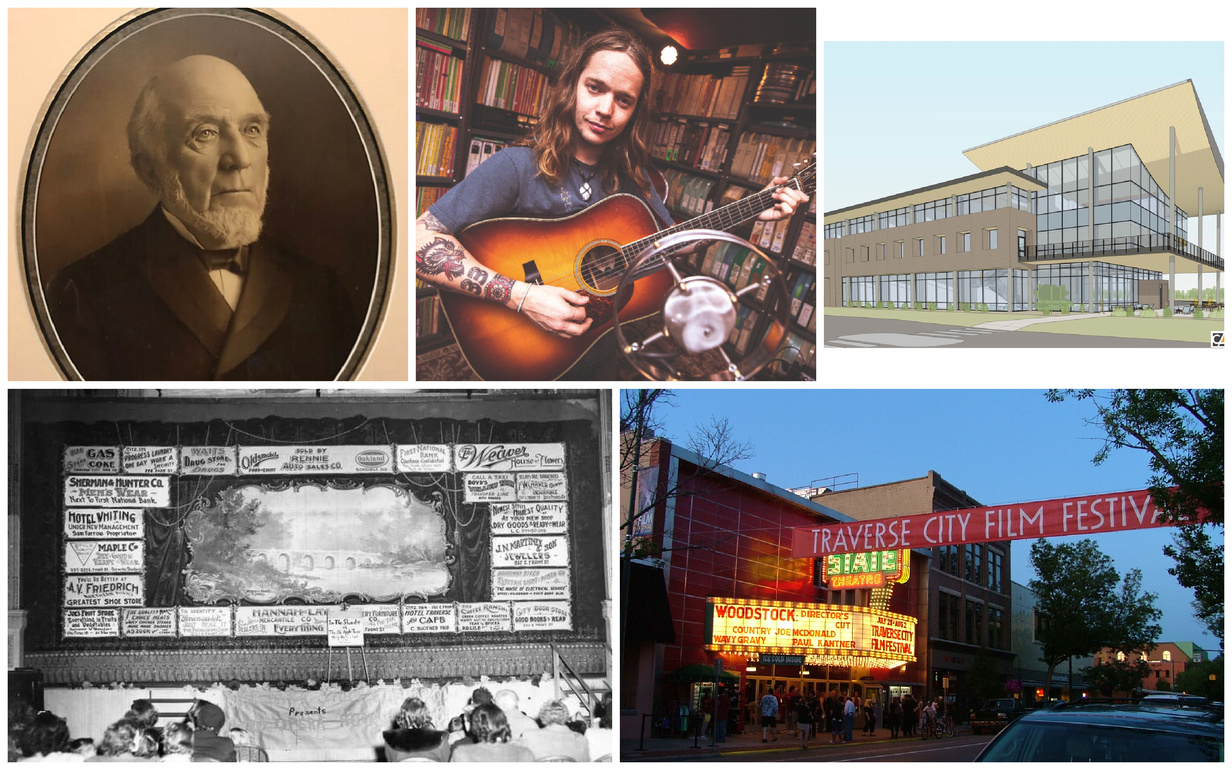
In 1895 lumber baron and businessman Perry Hannah became Traverse City’s first mayor.
42 years earlier he and business partners Albert Tracy Lay and James Morgan opened Hannah, Lay & Co. Mercantile on E. Front Street as a place where the workers at their nearby lumber mill could stock up on everything from fresh groceries to hardware. That operation paved (well, the paving didn’t actually come until the early 1900s) the way for downtown Traverse City’s retail and small business landscape which has spent the last 170+ years welcoming a rotation of restaurants, boutiques, and entertainment venues.
The City Opera House helped kick off the arts scene.
Like The State Theater and Horizon Books, some of those places have anchored downtown Traverse City – a major destination for the millions of annual visitors who come Up North – for decades (despite periods of closure or restoration) and the City Opera House is one of them. Since opening its doors in 1892, the 680-seat auditorium has hosted everyone from music legend Lyle Lovett to comedian Marc Maron and served as a main host for the now defunct Traverse City Film Festival.
Bygone festivals, businesses, and eras are something locals can’t stop talking about.
Speaking of the gone-but-not-forgotten TCFF, if there’s one thing we northerners like to do, it’s reminisce and rehash (we’re all still talking about the Blizzard of ’78 and the Almost Tornado of 2015). Fast-casual Tex-Mex restaurant Taco House, 1970’s diner hangout Stacey’s on Front Street, and the Microbrew and Music Festival are just a few casualties of time and the changes that come with it that tend to come up in frequent “remember when” conversation.
Tourism and hospitality aren’t our only economic drivers.
Cherry Festival, miles of wine coast, and a major regional airport have landed us on countless top 10 lists and help draw an estimated $1 billion in annual visitor spending across the greater Grand Traverse area. But before all of that we had the Traverse City State Hospital (formerly called Northern Michigan Asylum for The Insane and currently known as shopping and dining hub, The Village at Grand Traverse Commons). Since the 1800’s, healthcare has been a key sector for Traverse City – Munson Healthcare is one of our largest employers – along with education, innovation, and manufacturing.
Traverse City’s outpacing itself.
Growth wise, it’s been a whirlwind decade-and-a-half, both in terms of business – juggernaut Hagerty Insurance rocketed from a local basement startup to a $4.7 billion company and the only from the area to be publicly traded – and population. The latest census shows an increase of nearly 10,000 residents for Grand Traverse County between 2010 and 2020, a number that’s projected to balloon even more at the next count. An influx of pandemic-era remote workers choosing northern Michigan as their homebase is contributing to the boom but the largest population increase is a mix of retirees moving here plus a generation of lifelong residents who are aging in place. As they do, they're facing a regional shortage of healthcare resources and an ongoing housing crisis that’s left leaders strategizing through red tape (like the 60 foot height restriction on buildings that limits new residential builds or adding onto existing ones) and large-scale market challenges that have hit the entire state.
We’re exporting more than cherries.
Agriculture, especially cherries and wine, grab most of the attention, but Traverse City’s also produced some pretty big names, many of them by way of Interlochen Arts Academy (Jewel, Chappell Roan, and Norah Jones are all alumni). Then there’s those who’ve grown up in the area including activist, writer, and NMC graduate Chasten Buttigieg, New York Times bestselling author Doug Stanton, and Grammy-winning singer-songwriter, Billy Strings who moved to the area after high school and busked Front Street back in the day. As for the next big things to come out of Traverse City, it’s probably no surprise that they’ll likely center around the Great Lakes. The Freshwater Research and Innovation Center is slated to launch in 2027, aiming to boost blue tech jobs in northern Michigan while giving researchers a homebase for innovating technology that could reach the global market.


Past to Present: The Newcomers (Really Condensed) Guide to Traverse City
Read More >>These Will Be Some Of Traverse City's 2026 Headlines
Read More >>NMC Boardman Lake Campus Sale Set at $27M; Spring Closing Targeted
Read More >>Tank To Table: Momentum Builds For Local Shrimp Company
Read More >>



Last Looks At 2025: The Year's Most Eye-Popping Numbers, From Airport Traffic To Food Insecurity
Read More >>Traverse City’s Most Violent Year? Crime Stories Dominate The Ticker’s 2025 Top 8
Read More >>TCAPS Accepts State Funding Tied to Controversial Mandate
Read More >>Man Faces Multiple Charges After Crashing Into TC Snowbank
Read More >>Where To Ring In 2026 In (Traverse City) Style
Read More >>What’s Next for Northern Michigan? Leaders Weigh In on 2026
Read More >>