Vacation Rental Cap Headed to December Vote
By Beth Milligan | Nov. 20, 2026
A new cap could soon be in place limiting the number of vacation rentals allowed in different Traverse City districts. City commissioners voted Monday to advance the changes to a December 7 enactment vote – part of a strategic effort to stem the short-term rental tide.
Traverse City currently allows two categories of short-term rentals (STRs). One is tourist homes – or hosted rentals where the owner is present, like a bed-and-breakfast – while the second is vacation home rentals. Vacation rentals don’t need an owner present and allow a guest to rent an entire apartment or house, commonly through a site like Airbnb. While tourist homes are allowed in residential neighborhoods in Traverse City, vacation rentals are not.
Vacation rentals instead are typically clustered in commercial districts, like the downtown area. In 2021, the city enacted a cap in three districts limiting the number of STRs allowed on one property. The cap, which was applied to the C-1 (Office Service), C-2 (Neighborhood Center), and D-2 (Development) districts, meant that no more than 25 percent of the dwelling units on a particular parcel could be STRs.
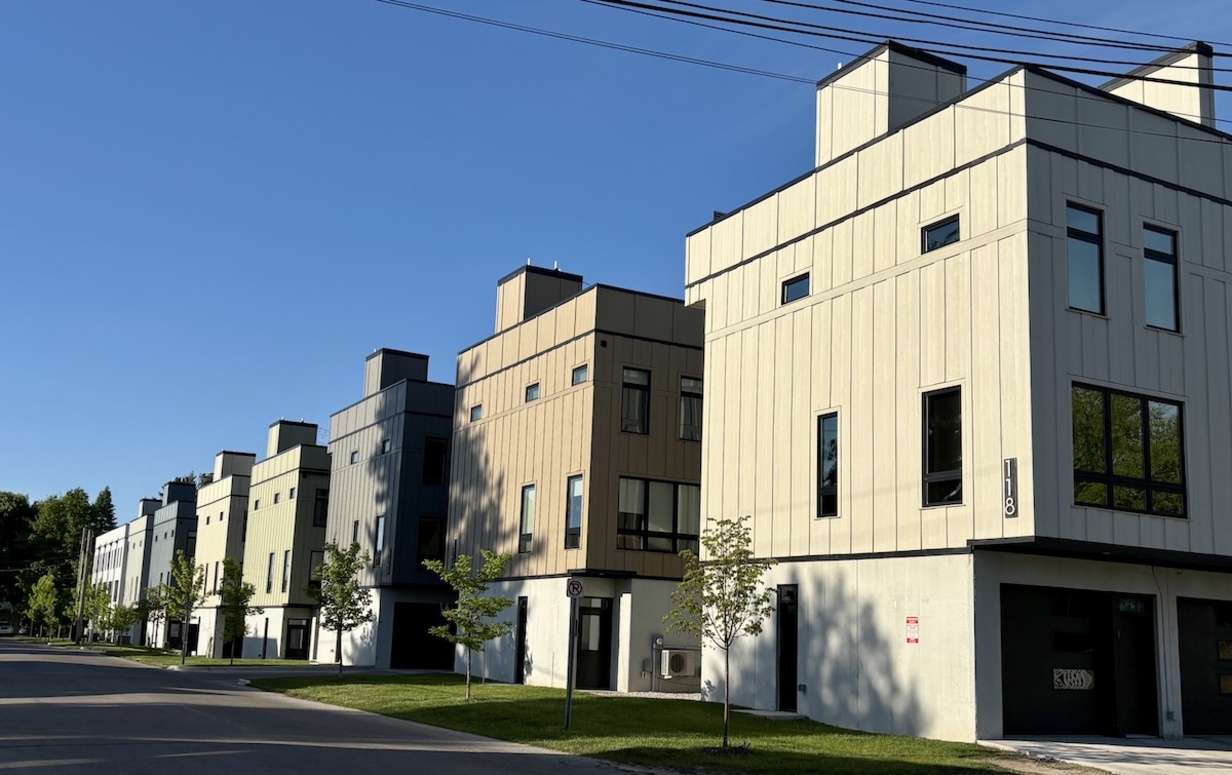
However, aside from those three districts, “none of the other commercial districts have been regulated since then,” City Planning Director Claire Karner explained Monday. That means in the HR (Hotel Resort), I (Industrial), D-1 and D-3 (Development), C-3 (Community Center), and C-4a, C-4b, and C-4c (Regional Center) districts, 100 percent of the units on a site can be vacation rentals. That has led to the creation of several developments in which most if not all building units are STRs.
Residents expressed unhappiness about the spread of vacation rentals when the city created its recent strategic action plan, citing a strong desire for better regulations. Commissioners are now considering significantly reducing the percentages in districts that are at 100 percent to limit STRs. The proposed changes include banning vacation rentals outright in the I (Industrial) district and dropping them to 25 percent in the D-3 (Development), D-1 (Development), and C-4c (Regional Center) districts.
Both the C-4a and C-4b (Regional Center) districts would be reduced to 50 percent, while C-3 (Community Center) would drop to 35 percent. Only the HR (Hotel Resort) district would stay at 100 percent, because that district is specifically designed for hospitality units.
The city currently has 547 licensed vacation rentals, according to Karner. That represents an estimated 6.7 percent of Traverse City’s total housing stock. While that’s significantly higher than the U.S. average – a Congressional report last year estimated that STRs make up roughly 1.6 percent of the country’s total housing stock – it’s also far below some tourist communities, like Saugatuck. There, STRs comprised 32 percent of the housing supply in the city’s six R-1 residential districts until offficials enacted a 20 percent cap in 2024.
As occurred in Saugatuck, a new cap in Traverse City could only be achieved through attrition or new development. Because property owners are typically protected from downzoning, or zoning changes that negatively impact their allowed uses or rights, existing STRs would be grandfathered in under the cap. The 2021 caps created about 93 STRs that were grandfathered in and became legal nonconforming uses, Karner said.
The new caps proposed for the remaining districts could grandfather another 284 vacation rentals in as legal nonconforming uses, she said. While new developments would be restricted by the caps, existing properties that exceed those percentages could continue to do so until their STR licenses expired. Some communities hasten that attrition by not allowing licenses to transfer to new owners. That’s the case in East Bay Township, which set a recent cap of 145 licenses township-wide and made licenses non-transferable. The number of licenses there has dropped from 180 down to about 130, Karner said.
However, when approving the 2021 caps, Traverse City allowed licenses to be transferred to new owners so long as applications were approved within 90 days of the closing date. If licenses aren’t transferred within that window, they’re terminated. The cap then kicks in, prohibiting any new licenses from being issued for the property until the overall total drops below the allowed percentage threshold.
Karner said city leaders could consider a different policy approach for STRs going forward, such as not allowing transfers. They could also consider a range of other regulations to address vacation rentals. Zoning ordinances are just one side of the enforcement coin; police power ordinances are the other. While zoning ordinances regulate land use, police power ordinances regulate activities. Importantly, police power ordinances don’t have a grandfather clause and can be applied immediately. They also apply citywide, not just to a particular district.
As one example, Traverse City could consider a citywide cap on STRs – not just caps in specific zoning districts, Karner said. Police power ordinances could also be updated to address a variety of STR issues, such as licensing, fines, nuisance complaints, renter conduct, noise, parking, and more. Commissioners voted 5-1 Monday – with Jackie Anderson opposed and Lance Boehmer absent – to move the zoning caps forward to a December 7 vote. They also expressed interest in pursuing police power changes in the future.
Anderson cast the lone ‘no’ vote because she felt “strongly enough about combining” the zoning and police power changes that she didn’t want to “support this one as a standalone.” However, other commissioners called the zoning caps “a step in the right direction,” in the words of Commissioner Mitch Treadwell, with room to still do more.
“That’s what I'm most comfortable with,” said Mayor Pro Tem Laura Ness. “Proceeding with what we have in front of us tonight, but recognizing that we can put more teeth in it and have more of an impact on that short-term rental number through additional city commission policy.”
Comment

Vacation Rental Cap Headed to December Vote
Read More >>Interlochen Announces Special Centennial Edition of Collage for Summer 2027
Read More >>TVC Board Approves Raises, Bonuses
Read More >>Old Town Playhouse Executive Director Announces Retirement
Read More >>



How Growing Numbers, Safety Concerns Led to First-Ever Two-Night Downtown Holiday Kickoff
Read More >>FAA Ground Stop Impacts 2,000 Local Travelers
Read More >>Beitner Bridge Reopens, MDOT to Address Chums Corner Light Thursday
Read More >>“Educator Village,” More Projects on Garfield Agenda
Read More >>TCLP Tracks Energy Savings, Electrification
Read More >>Parking Takes Center Stage in West End Discussions
Read More >>