
Commissioners Review Upcoming Projects, Press Treasurer
By Beth Milligan | Oct. 22, 2026
Efforts to address widespread erosion at the Grand Traverse Natural Education Reserve and repair the Oleson Bridge following damage from the April floods could cost north of $12 million. While Grand Traverse County is hopeful for FEMA assistance, the property is just one on a long list of sites needing capital improvements in the coming years. County commissioners discussed those projects Wednesday and continued to press County Treasurer Jamie Callahan on outstanding IRS issues.
Capital Projects
As part of preparing the county’s 2027 budget, commissioners Wednesday heard a presentation from County Director of Parks and Facilities John Chase on upcoming capital projects.
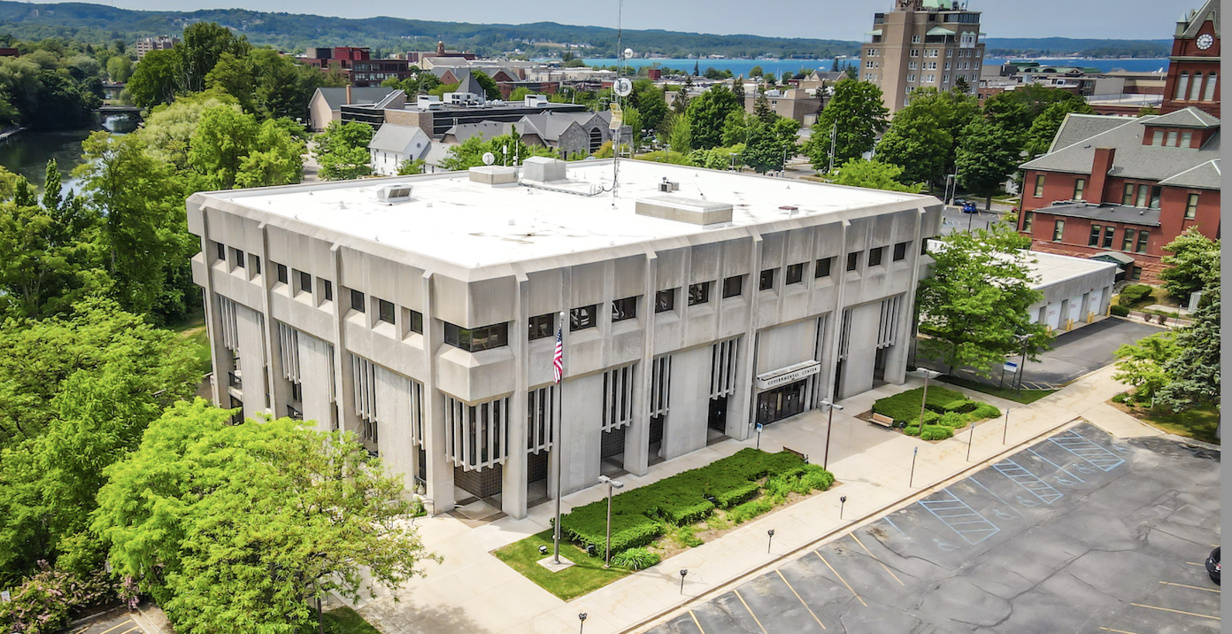
Any project that costs more than $25,000 and is intended to improve the functionality or lifespan of a county space or building goes into the capital improvement plan (CIP) budget, Chase explained. The 2026 CIP budget was roughly $2.5 million and covered projects like a first-floor remodel of the Governmental Center, Historic Courthouse renovations, Civic Center improvements, roof and pavement repairs at Medalie Park, new parks signage, and jail lobby flooring.
Looking ahead, Chase said his department is using a multi-year CIP approach to better coordinate repairs and improve sequencing. The CIP outlines capital projects annually through 2031 with estimated costs. While total CIP needs are in the $14-15 million range each of the next three years, the available budget is only a fraction of that amount. Grants or other funding sources could help in some situations, Chase said, while other projects may have to be delayed. In 2027, the proposed CIP budget is $2.122 million, with a project from this year’s budget to improve the VASA trailhead also carrying over to next year.
Planned projects in 2027 include $1.5 million in HVAC and chiller upgrades to the Historic Courthouse and Hall of Justice, $85,000 in Camp Greilick septic and window improvements, $90,000 in jail and courthouse door upgrades, and $60,000 to purchase a robotic mower for the Civic Center. Chase explained that it costs the county $2,275 every time someone comes to mow the Civic Center ballfields, which happens more than two dozen times a year. Because the mowing pattern is straightforward with no trees, a robotic mower could do it autonomously at a significant cost savings, Chase said.
Over the five years of the CIP, the property topping the capital needs list at over $12 million is the Grand Traverse Natural Education Reserve (NER). The April floods caused significant damage to the property, including the loss of the Oleson Bridge. The “entire trail system south of Cass Road is disconnected now because of a lack of that bridge,” Chase said. Replacing it is estimated at $1.23 million. The county has applied for FEMA assistance, which could cover 75 percent of the project cost – putting the county’s share at $307,500. However, the county likely won’t know before the end of the year whether that funding is approved, leaving a question mark in the budget.
Millions more in additional repair work is needed to mitigate widespread erosion issues at the site, which will only continue worsening if not addressed, Chase said. While commissioners are hopeful FEMA funding will offset costs, they agreed serious discussions will be needed on how to manage the NER if federal support doesn’t come through. Commissioner Ashlea Water said that could require having a plan “B or C down the road” or potentially rethinking trail options.
Treasurer Update
Commissioners continued to grill County Treasurer Jamie Callahan Wednesday on IRS issues, marking the latest in a series of his requested appearances before the board.
Commissioners have repeatedly questioned Callahan over the past year on issues ranging from late state audit filings to delayed bank reconciliations. The main topic of discussion in recent weeks has been multiple past missed payroll tax payments to the IRS. While the payments themselves are now all caught up, staff said, the county is facing at least $90,000 in penalties. Another $52,000 in penalties were recently waived by the IRS, and Callahan said his office was working to get the rest forgiven.
Still, the county’s accrual of over $140,000 in penalties, the need to hire an outside firm to train Callahan and his staff for the next year – estimated to cost at least $50,000 – and internal staff time having the finance department assist the treasurer’s department evoked sharp criticism from commissioners about the department’s growing cost to taxpayers. Callahan recently indicated he has no plans to resign, though commissioners are exploring legal options for removal of an elected official.
Commissioners Wednesday approved several motions requesting additional information from Callahan and staff. That includes written documentation of all appeal/abatement requests to the IRS, missing IRS correspondence, confirmation that all IRS payments have been made for 2025 and 2026, a report on how much finance staff time has gone to the treasurer’s office, invoice totals for the outside firm’s assistance to date, and an audit of the treasurer’s staffing plan for 2026. That information is expected to be presented at the commission’s November 18 meeting.
Comment

Commissioners Review Upcoming Projects, Press Treasurer
Read More >>Grand Traverse County Commissioner Arraigned on Drunk Driving Charge
Read More >>City Commission Approves Prowling/Trespassing Laws, Attainable Housing District
Read More >>Officials Work to Improve Boardman River Health – But Face Constraints
Read More >>



City Eyes Major Boardman/Washington/Cass/State Project
Read More >>Annual TC Patriot Game Set for Friday at Thirlby Field
Read More >>NMC Lands $630,000 Grant from the State
Read More >>Prowling Ordinance, Attainable Housing District Headed to Commission Vote
Read More >>Garfield Township Approves South Airport Sewer Work, Townline Rezoning, Trail Projects
Read More >>Rolling Farms Cafe Owner Indicted on Tax Fraud
Read More >>