Garfield Approves PILOT Agreement to Convert Ridge45 to Workforce Housing
By Beth Milligan | July 29, 2026
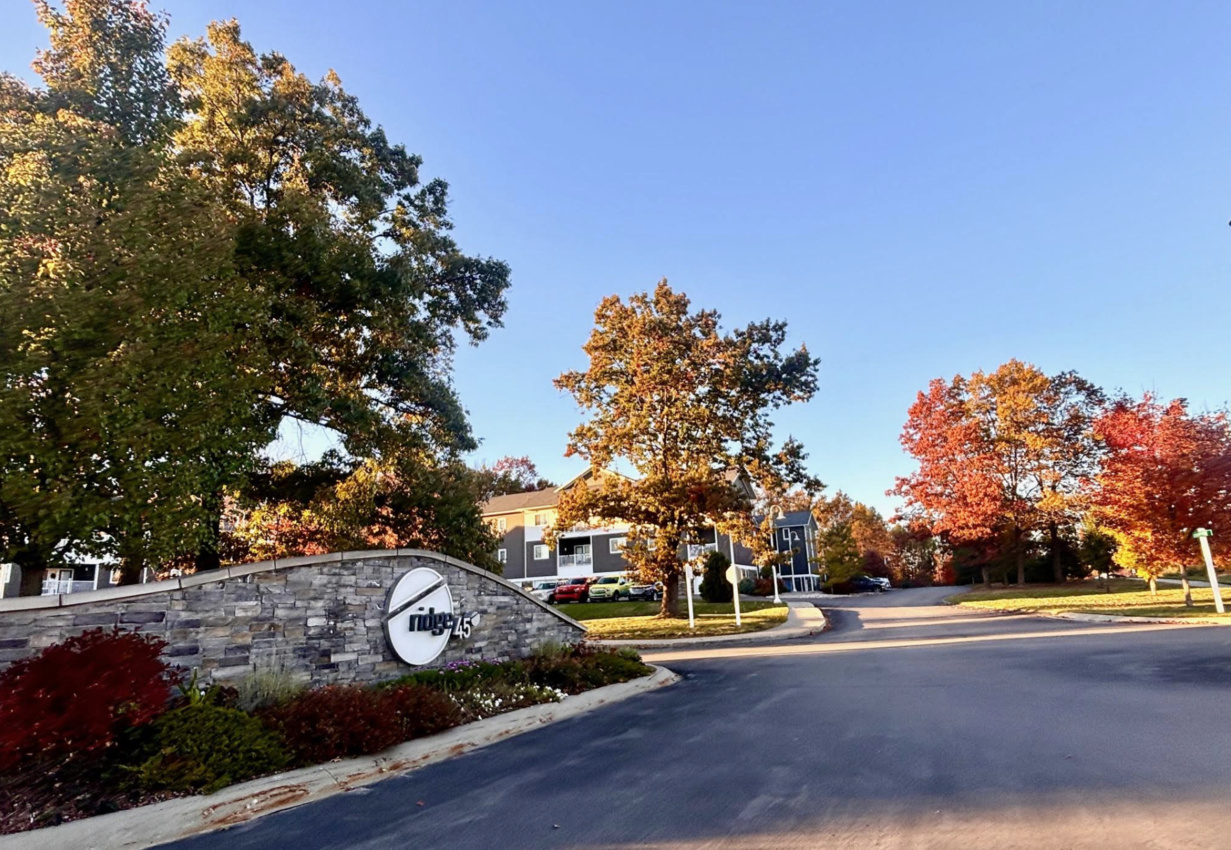
One of Garfield Township's largest housing developments, Ridge45 – which has 484 apartments near the corner of LaFranier and Hammond roads – will be converted to workforce housing for at least 15 years after trustees unanimously approved a payment-in-lieu-of-taxes (PILOT) agreement for the property Tuesday.
New Ridge 45 LLC – a partnership of River Caddis Communities and RMP Investments that is purchasing the apartment complex – applied for the PILOT agreement. Instead of normal property taxes, a developer under a PILOT pays a defined percentage of net shelter rents to the local municipality. In this case, New Ridge 45 LLC has a six percent agreement in place with Garfield Township for 15 years, during which time the apartments must be geared to tenants earning 80-100 percent of the area median income (AMI).
The new owners said the PILOT would achieve two things: keep rents stabilized in a market where rates are sharply increasing annually and allow the company to reinvest in the property. Data from CoStar and Hello Data shows that “newer apartment communities in the area have seen rents increase by an average of five percent per year since 2021,” New Ridge 45 LLC wrote. “To put that in concrete terms: an apartment that rented for $1,600 in 2021 now costs around $2,040 today.”
However, capping rents at 80-100 percent AMI would save residents $117 monthly starting in 2026 and rising to $359 monthly by 2031, the group estimated. If Ridge45 followed market trends, the average monthly rent would climb to $2,435 by 2031, according to the group. But under the PILOT rent limits, which follow an income-based schedule published annually by HUD and the Michigan State Housing Development Authority (MSHDA), “the average rent would instead be capped at approximately $2,076 per month by 2031, keeping it within reach for the people Ridge45 is meant to serve,” the company wrote.
New Ridge 45 LLC said it planned to invest over $2 million into improvements at the property. Those include smart irrigation controllers, common-area HVAC optimization, and high-efficiency water fixtures and tracking. The changes are “projected to conserve more than 2.6 million gallons of water in the first year alone, equivalent to four Olympic swimming pools, and over 13 million gallons over five years,” the company wrote.
Beyond efficiency upgrades, multi-use sport courts, additional raised garden beds, a gazebo with BBQ stations, and a pet washing station are planned. “These are all amenities that foster community connection and outdoor activity,” New Ridge 45 LLC wrote. Investments in building technology, including drone-based thermal imaging for building inspections, will “contribute to an improved response time for resident concerns and needs,” the company said.
Township officials said one initial area of concern was that the conversion to workforce housing would displace current residents. New Ridge 45 LLC addressed that issue in its application. In a summary to the board, Township Manager Chris Barsheff noted that “all current residents will be offered a lease renewal regardless of income, with the property naturally converting to workforce housing through resident turnover.”
Garfield Township will continue to collect full taxes on any units that remain market rate, with the PILOT applying only to apartments that are converted to the 80-100 percent AMI cap. Ridge45, which has a mix of studio, one-bedroom, two-bedroom, and three-bedroom units, is currently 97.5 percent occupied. The owners plan a near-even split among the units between 80 percent and 100 percent AMI tenants.
In addition to six percent of annual shelter rent, New Ridge 45 LLC must also pay fees for township services. Like the PILOT, the municipal services agreement (MSA) lasts 15 years; the fee is equal to five mills of the property value. Grand Traverse County can also collect a fee to make up the difference in its lost property value. In total, New Ridge 45 LLC is projected to reduce its annual tax bill from roughly $1.1 million to roughly $811,000. However, thanks to the MSA, Garfield Township is expected to come out ahead – collecting nearly $103,000 more than it does now.
Township Supervisor Joe McManus said one benefit of the Ridge45 PILOT is that unlike a new construction buildout, which can sometimes take years to complete, Garfield will see “immediate results” for workforce housing under the agreement. That will come “without adding more buildings and without displacing existing residents,” he said.
Trustees Tuesday discussed adopting a new policy for workforce PILOTs that will guide how future applications are graded. The board discussed setting a cap on the number of housing units that receive low-income or workforce tax breaks in Garfield Township, such as 20 percent of the overall housing stock. Though trustees agreed it was important to address the housing shortage and have units available for a variety of income ranges, several felt Garfield Township was shouldering a disproportionate share of PILOT projects.
Trustee Molly Agostinelli said some townships, like Peninsula Township, have zero such projects. Meanwhile, Garfield Township has well over a dozen, according to staff estimates. “We don’t want it to be all one thing,” said Trustee Chuck Korn, referring to the township’s housing mix. Agostinelli agreed, saying: “We want to be aware of that balance.” Trustees are expected to revisit the policy at their August 11 meeting.
Comment

Garfield Approves PILOT Agreement to Convert Ridge45 to Workforce Housing
Read More >>Interlochen Sexual Abuse Report Released; 47 Individuals Accused of Misconduct
Read More >>City Eyes Snow Removal Plans for Winter
Read More >>TC Planning Commission Talks Eighth Street Project, Zoning Changes
Read More >>



Dems Square Off In 37th Senate District Primary
Read More >>Community Group Aims To Raise Thousands For Central Grade HVAC
Read More >>Flapjack & Flannel Festival Off for 2026, Will Return in 2027
Read More >>Garfield Township Tees Up Data Center Moratorium; Incomplete Application Submitted for Project
Read More >>Buell Retiring at GTACS, Milliman Named Next Leader
Read More >>City Hires Company to Operate Hickory Hills, Aims to Grow Revenue & Programming
Read More >>