
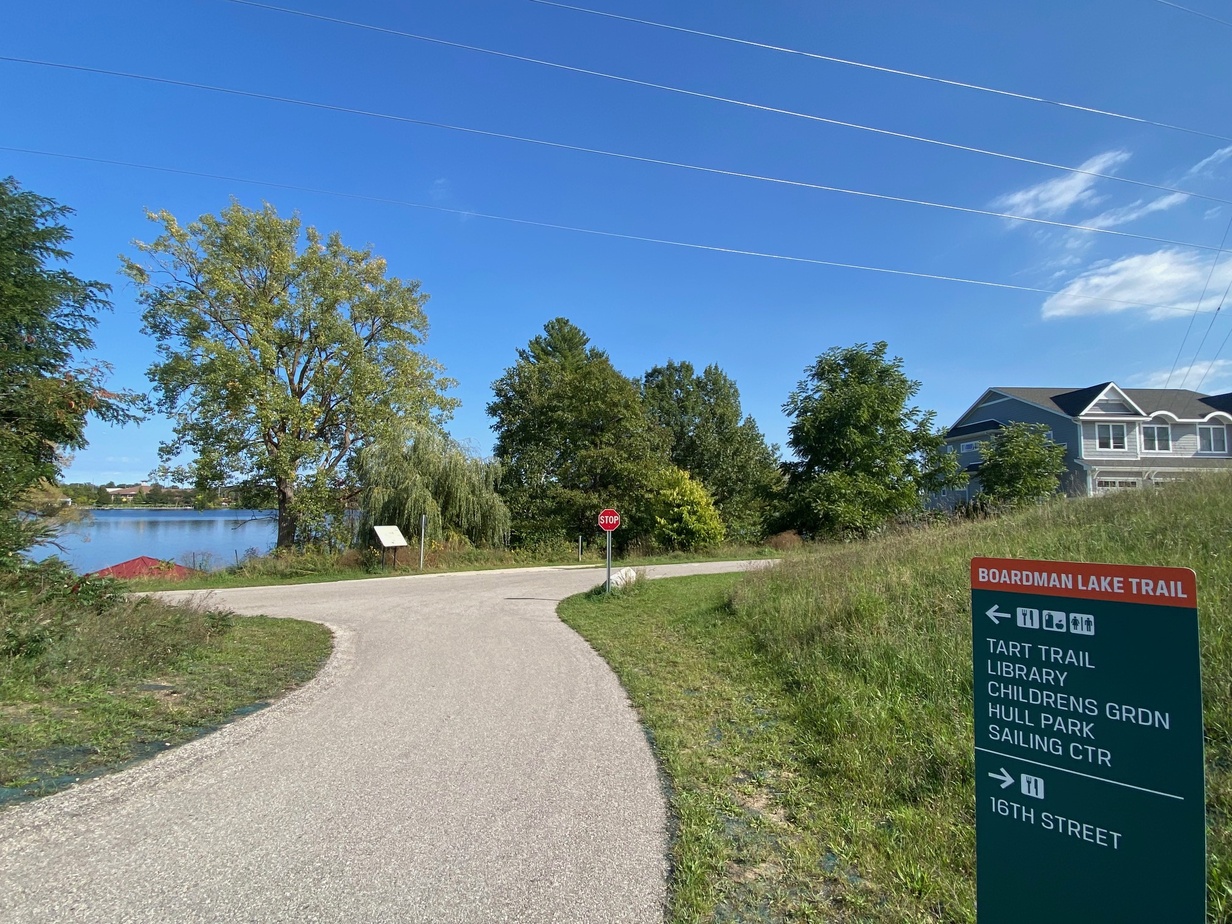
GT County Trail Millage Proposed
By Beth Milligan | June 16, 2026
A ballot proposal years in the making could head to voters this November. Grand Traverse County commissioners Wednesday will discuss putting a countywide trails millage on the fall ballot – a 10-year levy that could help generate $2.6 million annually as a dedicated funding source for trail projects across the region.
Commissioners will discuss the millage Wednesday but are not expected to vote on putting it on the ballot until their July 15 meeting, giving county staff enough time to vet its financial and legal components as required by county policy. The 0.3-mill levy is proposed to start in 2026 and go through 2035. The owner of a property with a market value of $100,000 (taxable value of $50,000) would pay approximately $15 per year under the millage, which is expected to generate $2,635,012 in its first year.
Millage funds could be used toward construction, planning and engineering, capital replacement, property/right-of-way acquisition, maintenance, and program administration for trail projects across Grand Traverse County. CEO Julie Clark of TART Trails, a key backer of the proposal, says it’s a concept that has “been discussed in the community for years, going on decades.” Momentum has built in the last few years as local communities have increasingly prioritized non-motorized transportation, says Clark, from the City of Traverse City’s adoption of a Mobility Action Plan to Garfield Township’s exploration of becoming more bikeable and walkable to East Bay Township’s support of major projects like the Three Mile Trails expansion and Safe Routes to School buildout.
A number of high-profile projects could finally move forward with funding support, Clark says. Finishing the Three Mile Trail is one example; building the long-discussed Interlochen Community Art Trail stretching from Green Lake Township Memorial Park to US-31 is another. Clark notes the Grand Traverse County Road Commission is also planning to rebuild Five Mile Road, a project tentatively slated for 2028. Creating a separated trail for cyclists and pedestrians has been discussed for that project, but there’s currently “no funding source to help transform that corridor and put in the right infrastructure,” Clark says. The Road Commission is also leading a steering committee that will evaluate the future of South Airport Road and has discussed incorporating a safe crossing for trail users as part of the road’s redesign.
In addition to helping fund those types of projects, a millage could ensure non-motorized amenities are included when other road reconstruction projects come up and provide a key local match for grant opportunities, according to Clark.
“There’s a real need to be able to leverage state and federal funds,” she says. “We can find grants, but if there aren’t any matching funds available, it’s hard to bring in those outside dollars. Infrastructure projects aren’t getting cheaper, so this would be a way to move things forward faster.”
County Administrator Nate Alger notes commissioners have final say over whether to put the millage request on the ballot. “It’s completely their decision,” he says. Commissioners have historically typically opted to allow such proposals to proceed, leaving it up to voters to decide whether they want to support a particular request. When commissioners voted to put several millage requests on the ballot in 2022, County Finance Director Dean Bott said that if voters are willing to support certain services, it frees up general fund dollars to go other county priorities. “From a financial management perspective, that's a good spot to be in,” he said.
The trails millage proposal calls for establishing a Trail Millage Coordinator – likely to be TART Trails – that would administer the program under a professional services agreement with the county. That entity would prepare annual budgets and work plans, coordinate maintenance activities and project implementation, and provide regular reporting to commissioners. A Trails Advisory Committee would have local government representation from across Grand Traverse County, as well as other community stakeholders, and develop recommendations for funding allocations and project priorities. Because it’s a county millage, county commissioners “will retain oversight of the program and final approval authority for annual budgets, funding allocations, and expenditures,” the proposal states.
Comment
Commissioners Review Upcoming Projects, Press Treasurer
Read More >>Grand Traverse County Commissioner Arraigned on Drunk Driving Charge
Read More >>City Commission Approves Prowling/Trespassing Laws, Attainable Housing District
Read More >>Officials Work to Improve Boardman River Health – But Face Constraints
Read More >>



City Eyes Major Boardman/Washington/Cass/State Project
Read More >>Annual TC Patriot Game Set for Friday at Thirlby Field
Read More >>NMC Lands $630,000 Grant from the State
Read More >>Prowling Ordinance, Attainable Housing District Headed to Commission Vote
Read More >>Garfield Township Approves South Airport Sewer Work, Townline Rezoning, Trail Projects
Read More >>Rolling Farms Cafe Owner Indicted on Tax Fraud
Read More >>