(Over)Supply And Demand? Local Rental Storage Market Sags
By Art Bukowski | Aug. 8, 2026
While local development activity of all kinds has soared over the last five years, you might have noticed one thing in particular: There’s a heck of a lot more self-storage facilities around town than ever before.
Some growth is from big, national players like UHaul and CubeSmart, which have both built prominent facilities here within the past few years. The rest is from scores of smaller facilities, many locally or regionally owned, built in the wake of the COVID-19 pandemic.
But a headlong rush to build during and after COVID resulted in far too many facilities coming online, and now a lot of operators are paying the price.
“It's a very difficult time to be a self-storage owner or operator. Yes, there's demand and yes, people are utilizing storage more than they ever have in the past, but the real story is there was too much built.” says Brian Mullally, whose MBPG Capital owns, manages and consults in the self-storage industry. “There's just way too much supply.”
How much oversupply?
“Generally speaking, a stabilized square feet per capita metric in the industry is going to be around seven to nine square feet per capita, and in the Traverse City area now, we're closer to 14 to 15 square feet per capita,” Mullally says. “That’s nearly twice as much self-storage per person than what is considered a stabilized market.”
This, in turn, drives pricing down for everyone, Mullally adds.
“The cost of a storage unit has decreased more than 50% from where the peak was in 2022,” he says. “Rates have really taken a hit, and occupancy has really taken a hit.”
The problem does not appear to extend to owned storage spaces (as opposed to traditional rentals). Condo-based self-storage units, many of them high-end, continue to come online and sell well.
“We only have two left, and there’s 41 units in there,” says Jennifer Kreta, a real estate agent representing the newly opened M-37 Roundabout Barns on Blair Town Hall Road.
COVID changed everything for rentals, Mullally says. A lot of people were creating home offices, leading to a big demand for space to put all the stuff that had to be moved out of the way. Add to that people moving or relocating, and there was a record-high demand for self-storage.
“COVID really accelerated the need, which then in turn drove a lot of development during a time when interest rates were already at all-time lows,” he says.
Not only did national players enter the local market to meet this demand, Mullally says (think U-Haul and CubeSmart), but many local developers also rushed to get in on the action.
“Because storage became so popular, there were a lot of developers that didn't have backgrounds in self-storage that look at a self-storage facility and say, "Wow, that's a cash cow. Metal buildings with roll up doors, that's so easy. I can do that.’” he says.
The problem is that it generally takes a few years for a development to be planned, fully approved and built, Mullally says. By the time they were all open, there were just too many (and, to make matters worse, the home office trend had softened).
“A lot of these new facilities that were planned and approved and started construction during that COVID boom have really, really struggled,” Mullally says.
The national players rolling into town with unlimited marketing budgets also puts a squeeze on the little guy.
“The bigger players in the business have much more money to spend on marketing, which can help them, and it really hurts some of the local mom and pop operators that aren't thinking about the business the same way,” Mullally says. “CubeSmart is one of the largest operators in the country. I get mailers from them. You go online, and you get bombarded by ads on Facebook and TikTok.”
CubeSmart did not respond to requests for comment on its local operations; a U-Haul spokesman says its facility was built specifically to meet demand and that demand remains strong.
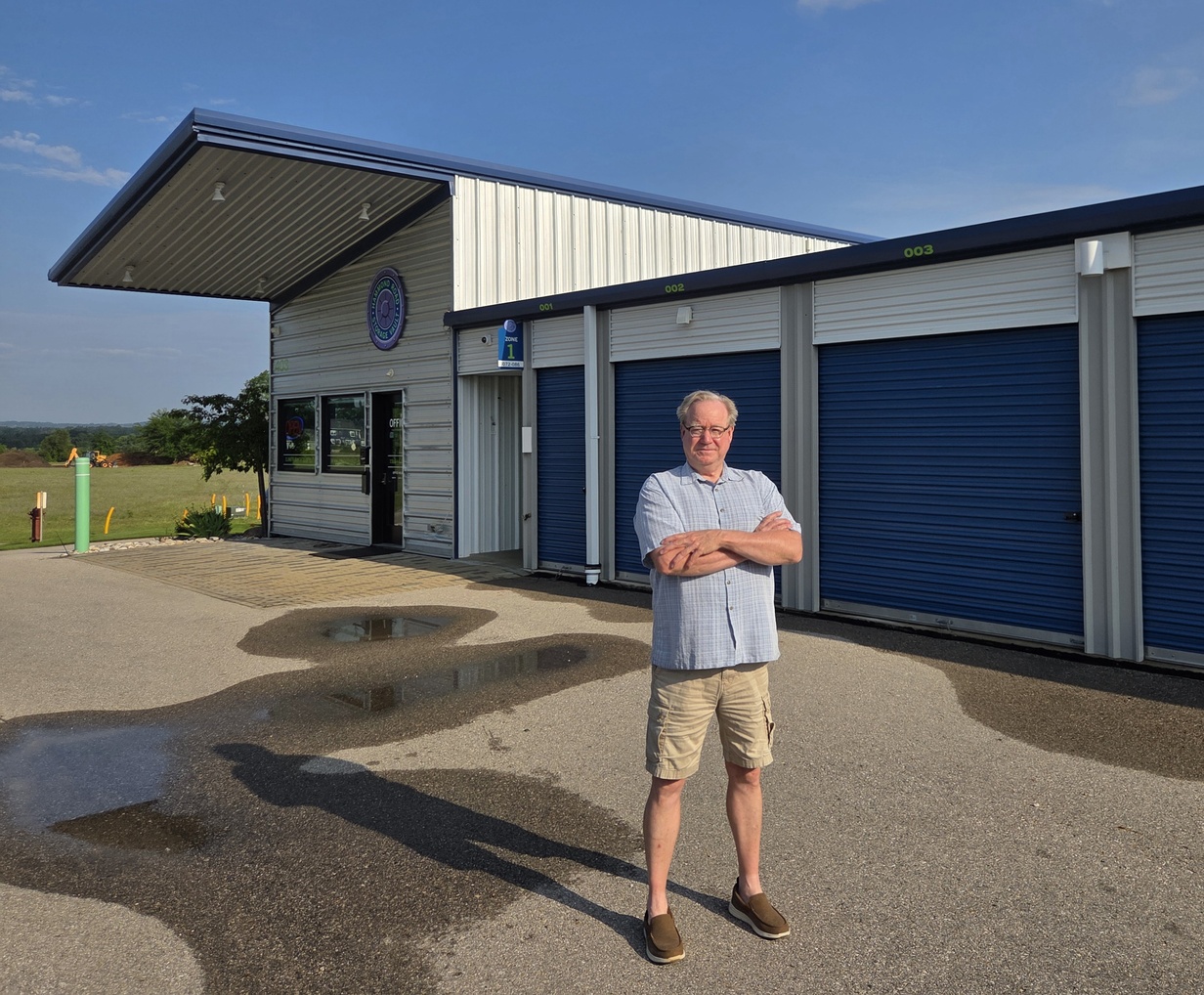
Jim Drake manages Hammond Road Storage Vault (about 400 units, built in 2018, 80 percent full) and Long Lake Storage Vault (about 120 units, built in 2024, 50 percent full). He agrees the area is oversupplied, but he’s not worried about it in the long term.
“I’m sure the population will eventually catch up with the number of storage units,” he says. “We know it’s a growing area…my goodness, just look around all see all the apartment complexes and developments being built in various areas.”
Yet demand suggests the oversupply problem does not extend to storage units designed to be sold and owned.
Many of the M-37 Roundabout Barns sold before they were even finished, and only two of the 41 remain, Kreta said. The large units range from $122,000 to $229,000.
While Kreta says a lot of things are in their favor – a killer location, dedicated website and very high-quality buildings – there are simply plenty of people who would rather own than rent, particularly for something as long-term as storage. They also have much more ability to control the unit, customize it and more, she says.
“There’s just a lot of advantages,” she says.
Editor's Note: This is a much condensed version of a larger story that appeared in the August edition of the Traverse City Business News (The Ticker's sister publication). Click here to subscribe or find out where you can get it on newsstands.
Photo: Jim Drake at Hammond Road Storage Vault
Comment
(Over)Supply And Demand? Local Rental Storage Market Sags
Read More >>Shorts to Host First Event at "Short's Landing" on Aug. 15
Read More >>What's Next For Interlochen Abuse Investigations?
Read More >>Mall Businesses on the Move, Mill District Plans Take Shape, More Retail/Restaurant News
Read More >>



2026 Primary Election Results
Read More >>Munson Commits $100,000 to Grand Traverse Area Women’s Resource Center
Read More >>Tom Stokes, Pioneering Traverse City Music Educator, Has Passed Away
Read More >>Childcare Center Proposed for Civic Center
Read More >>East Bay Projects on Deck: New Development, Safe Routes to School, TART
Read More >>Putting TCAPS High School Choir in the Spotlight
Read More >>