
What’s the Report Card for City Roads?
By Beth Milligan | July 16, 2026
Fifty percent good. Forty percent fair. Ten percent poor.
That’s the goal the City of Traverse City has set for the condition of its roads. The city’s actual numbers fall short of those goals – though are well ahead of state averages – with an estimated price tag of over $44 million to close the gap. Staff are working aggressively toward tackling the deficit, they told commissioners Monday, including prioritizing investment in maintenance now to avoid costly reconstructions down the road.
Staff presented commissioners with an update on the city’s pavement asset management plan (PAMP). The document outlines how the city will optimize the “lifespan and performance” of its 78.4 miles of road while “minimizing costs and risks.” The city rates the condition of every road on a scale of 1 to 10 with a system called a PASER rating, with 1 being total failure and 10 being brand new road.
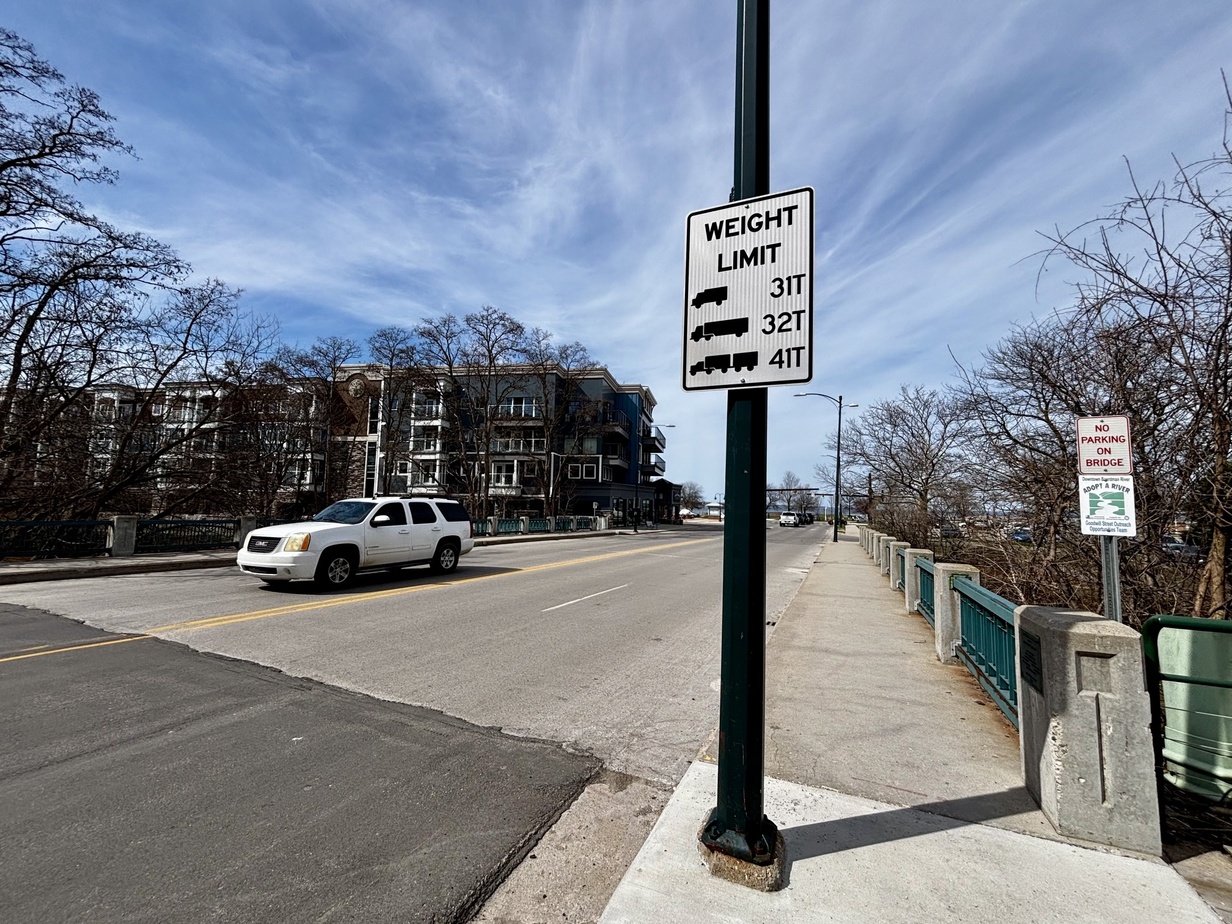
While communities are only required to update PASER ratings every two years to be eligible for federal funding, Traverse City is one of the few communities in Michigan that does it every year, said Asset Management/GIS Analyst Christine Black. Roads fall into two categories: major roads, which are the primary traffic corridors and routes preferred by emergency responders, and local roads, which are between major roads and connect to neighborhoods. Union (pictured), Front, and Cass are examples of major roads; Randolph, Boon, and the numbered streets – like Second or Fifth – are examples of local roads.
While the city’s goal is to have 50 percent of both road types rated in good condition, only 29 percent of major and 30 percent of local roads are rated that way now. The city has a 40 percent goal for fair condition; 54 percent of major and 45 percent of local roads are currently fair. Finally, in the poor category – the level at which a street is approaching failure and needs a total reconstruct – the city has a 10 percent goal. However, 17 percent of its major and 25 percent of its local roads are in poor condition.
Black noted that Traverse City is still well ahead of state averages. Collectively, 83 percent of Traverse City’s major roads are in either good or fair condition – compared to only 69 percent statewide. And about 75 percent of local city roads are in good or fair condition, while the state average is 57 percent. “We all think our roads here are in such poor condition, but if we take the statewide average, we're actually doing pretty well,” said Black.
Still, the city wants to make progress toward its goals, which are “not out of reach,” Black said. Showing a slide to commissioners of projected progress based on current investments, she said “major roads are trending pretty well” and could hit their target ranges by 2028. However, “our locals are not performing as well,” she said. “They are going to be our largest challenge.”
That’s because reconstructing a poor road – a condition more local roads are in – is “vastly more expensive” than preserving one in fair condition. Black cited as an example the current reconstruction of Monroe Street, which has a price tag of $4.5 million for .6 miles of road. By contrast, the city spent about $137,000 on crack sealing this year – a preventative treatment method that applies sealant to cracks to keep water out. Crack sealing can extend the life of pavement – which typically lasts 25-30 years – by several years and keep fair roads from deteriorating into poor ones, Black said.
The city has a significant funding challenge ahead to meet its goals. Recently, the city completed nine miles of crack sealing – but still has 35 miles of road that needs such work. The city also needs to tackle 12 miles of cape sealing (a more intensive form of road crack treatment), 3 miles of mill-and-fill, and 12 miles of reconstruction to meet its condition targets. Collectively, those projects would total over $44 million if tackled all at once.
Of course, those repairs can’t be tackled all at once – for reasons including costs, contractor availability, and traffic gridlock. But the city can continue to prioritize road investment in its annual budget process, officials said, and pursue other funding sources. Those can range from grants to millages (the city receives about $1.2 million annually from Grand Traverse County’s road millage) to federal aid to an accommodation tax. City Manager Benjamin Marentette said “destination communities” across Michigan are lobbying together for a change to state law to allow hotel assessments to support infrastructure like roads. Traverse City’s maintenance needs are “directly tied to the six million visitors this relatively small city gets in a year,” he said.
The city must shoulder other costs when it undertakes road projects beyond just the pavement, Black pointed out. Those include utilities (including water, sewer, and stormwater), sidewalks, and other mobility improvements. While city leaders will have to balance all those costs while determining which projects to prioritize, the main takeaway from Monday’s presentation was that investing early in preservation is the most effective way to save the city money in the long run.
“Deferred maintenance isn't free,” said Mayor Pro Tem Laura Ness. “It just costs more later.”
Comment

Seventh Street Closures Start Today
Read More >>City Braces for Historic Retirement Wave
Read More >>Local Kitten Rescue Calls for More Responsible Pet Owners
Read More >>Jet Has Landing Gear Alert at TVC
Read More >>



Shooting For The Moon, TC Artist Lands At ArtPrize
Read More >>Copy That: Local Print Shop For Sale
Read More >>Local Athlete Makes National Wheelchair Curling Team
Read More >>Northwest Michigan Housing Summit Set for Oct. 26–27
Read More >>International Fireworks Championship Returns
Read More >>Downtown Halloween Walk Moving to Weekday
Read More >>