
City Plans Major Investment in Shoreline Work
By Beth Milligan | July 8, 2026
Traverse City commissioners Monday unanimously approved spending up to $357,280 over the next five years to work with a team of coastal engineering, landscape, waterfront, and ecological restoration experts to address the city’s shoreline.
City voters last fall dedicated $1 million to shoreline stabilization and resilience improvements as part of a larger $3 million allocation from the Brown Bridge Trust Fund for park projects. City Manager Benjamin Marentette said that shoreline funding could be matched by up to $20 million in grant funding for the project area, which focuses on West Grand Traverse Bay from West End Beach to Bryant Park.
Commissioners approved a contract from a portion of that funding with GEI Consultants, a local firm that specializes in geotechnical and design services, including environmental and water resources. Firms Edgewater Resources and Beckett & Raeder will also be partnering with GEI, bringing different areas of expertise.
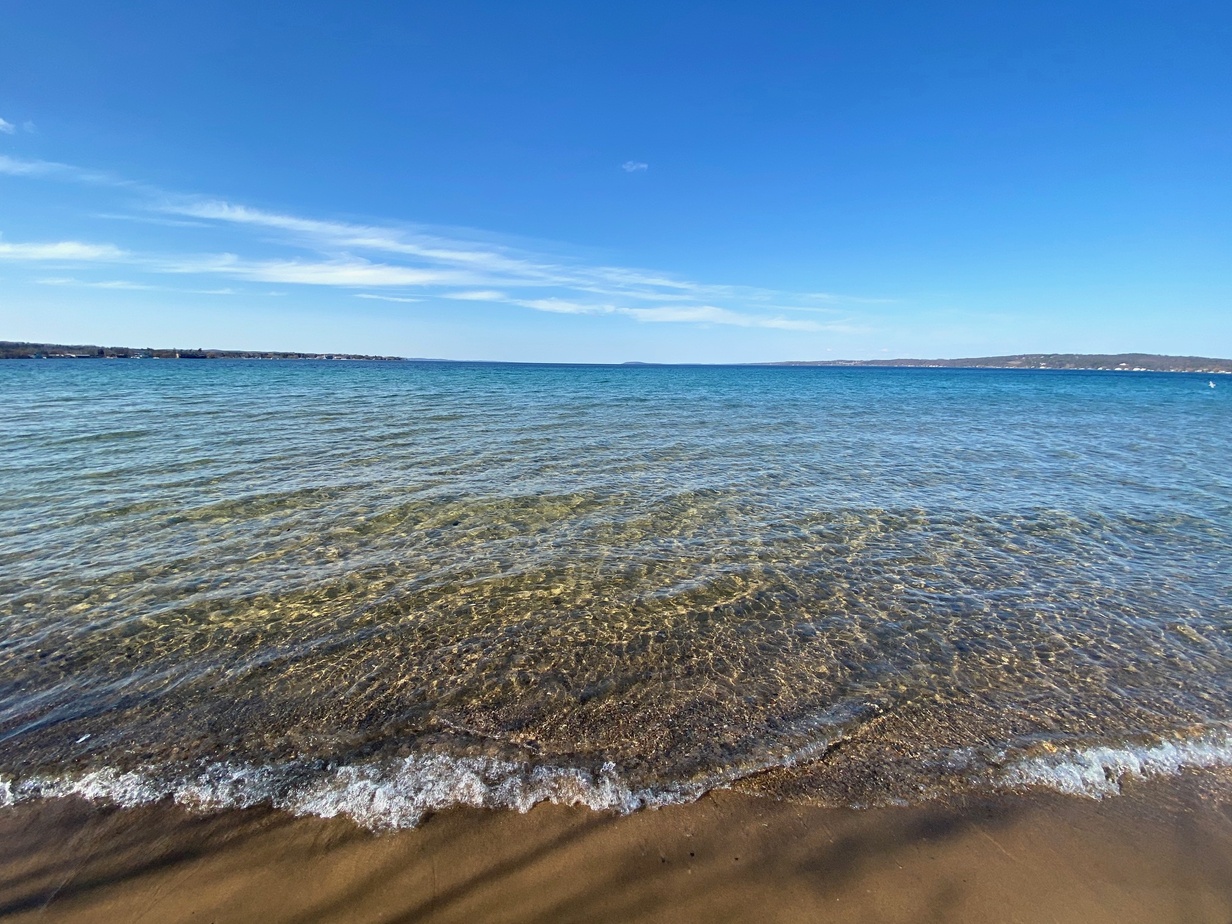
The project team, chosen from among 11 proposals submitted through a request-for-proposals (RFP) process, will create a detailed inventory of approximately two miles of shoreline on West Bay. That area is one of Traverse City’s “most visible and heavily used waterfront corridors,” according to the city’s Bay Brief. “The consultant team will assess erosion trends, sediment movement, nearshore currents, habitat conditions, public access, and other coastal processes affecting the waterfront. The work will identify opportunities for nature-based shoreline stabilization, ecological restoration, recreational enhancements, and long-term climate resilience.”
The team will compile topographic, bathymetric, and survey data and conduct wetland delineation, according to the proposal. The group will also review water quality details, gather wind/wave/water level/ice information, and develop an online dashboard to centralize project data. The firms plan to coordinate with both the U.S. Army Corps of Engineers and the Michigan Department of Environment, Great Lakes, and Energy (EGLE) to “to identify permitting requirements and project feasibility early in the planning process,” according to a memo from Parks and Recreation Director Michelle Hunt.
The project will culminate with a shoreline master plan that has “conceptual designs, project priorities, and planning-level cost estimates,” Hunt wrote. GEI will help identify grant opportunities and funding strategies for designing and constructing improvements. While getting up to $20 million in grant funding isn’t a “guarantee,” Marentette said, city officials “know that this work is important regardless. It sets us up for success in securing substantial grant funding.”
The list of necessary improvements could even exceed that amount, he cautioned. In its RFP, the city detailed shoreline challenges including “ongoing erosion and bank destabilization, undercut and failing vegetation, limited and poorly controlled public access to the beach, (and) vulnerability to fluctuating water levels and flooding events.” Developing a long-term maintenance plan, using bioengineering and other methods to stabilize the shoreline and improve its ecology, and enhancing public beach access – including offering universal accessibility where possible – are all goals.
Mayor Pro Tem Laura Ness asked about having the firms evaluate underground contamination as well. “Something that distinguishes our shoreline...is it was an industrial mecca for decades,” she said. With railroad lines, power plants, and factories among the industries that used to prominently dot the waterfront, figuring out where contamination still exists is a “very complicated piece of the shoreline puzzle,” she said.
Staff agreed. Hunt said the topic was emphasized in the interview process. She warned consultants that “we don’t even know what we’re going to find when we start digging in the Open Space,” she said. The chosen team has experience working with EGLE regulations and will provide recommendations on contamination mitigation.
Commissioner Jackie Anderson asked to have the consultants review the city’s draft riparian buffer ordinance underway to “align” that work with the shoreline project. In supporting the contract, Commissioner Heather Shaw noted that addressing the shoreline was “the number one thing people wanted” when giving feedback on desired park improvements. Mayor Amy Shamroe said that it was ultimately city residents who made the multi-year project possible.
“Thank the voters of Traverse City who gave us the money to do this,” she said.
Comment
Beyond Juicery, New Boutiques Opening in TC; More Restaurant, Retail News
Read More >>Airport Board Meetings Ready For Public Viewing
Read More >>Tensions at Road Commission Over South Airport Contract, Communications
Read More >>Summer Housing Prices Soar, Up 88 Percent Since 2019
Read More >>



Temporary New Location for City Parking Services
Read More >>New BlueTech Accelerator Drives Startups to Freshwater Research Center
Read More >>Community Group Strives to Save Central High School Gym
Read More >>City Announces Safety Plan for Hull Park
Read More >>California Dreamin’ at Cherry Capital Airport
Read More >>TVC Lands Air Service Conference
Read More >>