'This is Their World:' Inside the Carmelite Monastery, Where Nuns Go For Life
By Art Bukowski | July 5, 2026
On an average day, thousands of people drive by a relatively inconspicuous sign on Silver Lake Road.
“Carmelite Monastery of the Infant Jesus of Prague.”
Many don’t notice this sign, and most don't give it a second thought. Very few know that inside this Roman Catholic facility are 13 cloistered nuns, some of whom haven’t left the property in years. And a few have lived on the 45-acre grounds for decades, leading lives of relative peace and solitude as the modern world churns on on around them.
But even if you don’t know these nuns exist, it doesn’t matter. You are always in their thoughts – and in their hearts – regardless.
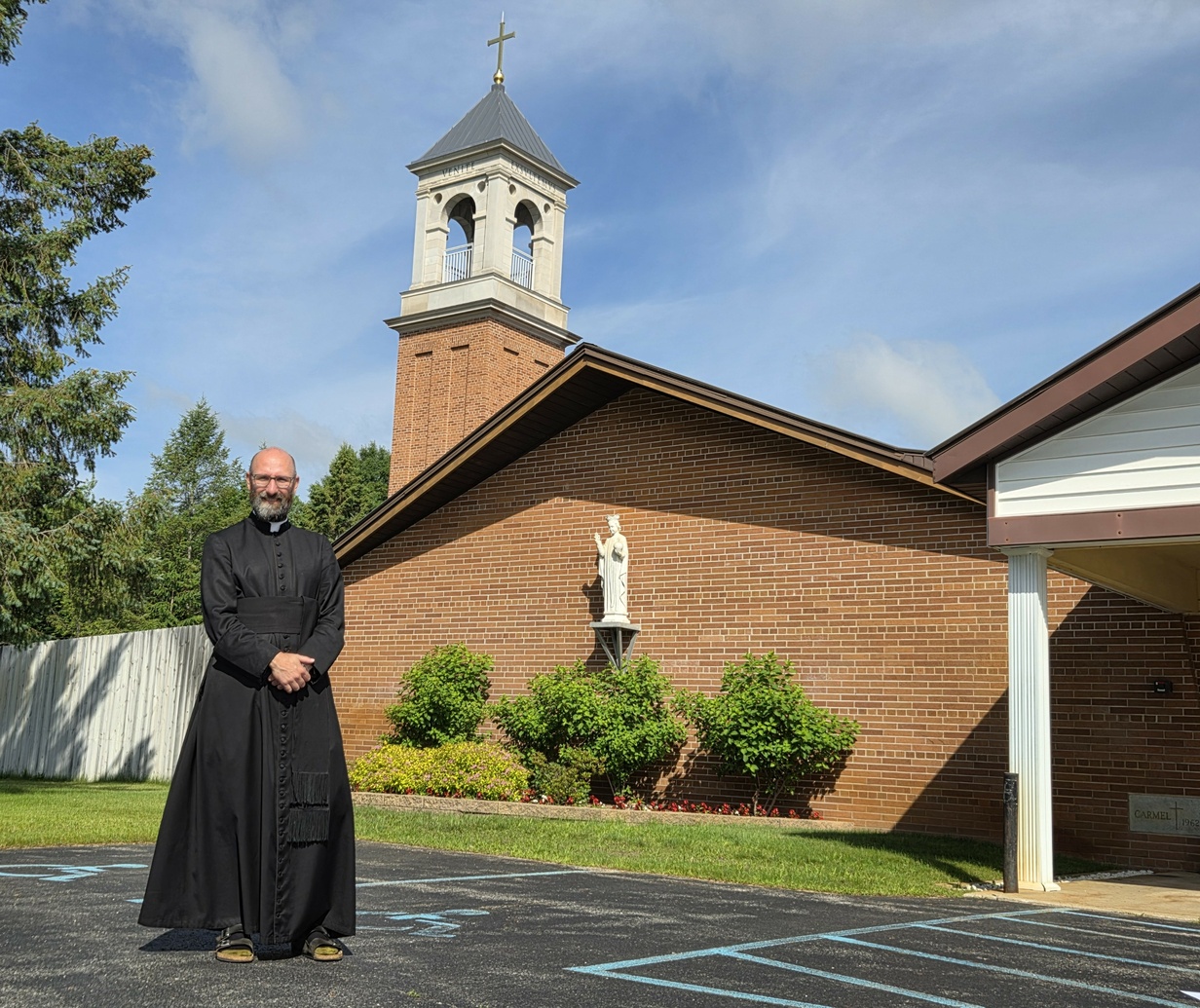
“They’re here on the hill praying for all of us all day long,” Father Christopher Jarvis, pastor of Christ the King in Acme, told The Ticker inside a non-cloistered hall in the monastery. “And they take that very seriously. You may not know them and they may not know you, but they love you and are praying for you.”
History and tradition
The monastery was founded around 1950 by Mother Theresa Margaret, initially in a home on Peninsula Drive. She oversaw construction of the current facility, which was completed around 1960, and died in 2013 at the age of 101, having been a nun for 83 years.
Mother Theresa Margaret was sent to Traverse City for this purpose by Mother Mary Elias, a “fiery, faith filled woman” who founded a similar Carmelite monastery in Grand Rapids after escaping persecution in her native Mexico (tales are told of she and her sisters miraculously surviving a firing squad there).
The Carmelite order is a major Catholic religious order rooted in an “800-year old tradition of contemplative prayer.” Carmelites are fond of cloistering, which largely sequesters them from contact with the outside world. At the Traverse City monastery, this means the entire wooded property and most of the large building complex are off limits to anyone but the sisters. Even the priests aren’t allowed in.
This cloister keeps the nuns in better connection with God, Jarvis says.
“It's a silent place where they enter into the quiet so that they can hear the Lord and listen to him,” he says. “The silence is where you hear God speak in your heart, and the Carmelite order is big on entering into that silence and listening to the Lord.”
The public is welcome to the chapel there for regular mass, and certain sections of the building are also unrestricted. Aside from the sisters, a priest (who declined comment for this story; Jarvis spoke on his behalf) and a caretaker and his family live on the non-cloistered portion of the property.
A lifetime of devotion
Unlike other sisters who serve in schools or public-facing capacities, these nuns remain tucked away and out of sight. Their family can visit and speak to them through a screen in a special visiting room, and the public can ring a bell in a separate room and speak to them (or pass them items) through a small revolving wooden door that keeps them hidden from view.
The nuns range in age from early 20s to early 80s, led currently (they take turns) by Mother Perpetua, a sister in her early 40s who has been there for many years.
Their purpose is to give their entire lives to Jesus Christ, and by doing so bring a slice of heaven to earth and pray for others to be “drawn into God’s love,” Jarvis says. For the majority of these sisters, once they enter the cloister, they’re there for life.
“This is their world. They’ll never leave,” Jarvis says. “And that’s the level of devotion they have.”
It takes a full nine years before these sisters make their final vows (including a year of observance before they enter the monastery) so there’s plenty of time to back out. And they aren’t prisoners.
“They’re not stuck here,” Jarvis says. “One left just a few months ago because she discerned it wasn’t her calling.”
There are also, of course, practical exceptions to the cloister. At least one sister has a driver’s license, and they go out for medical care when strictly necessary. But that’s about it, Jarvis says. Everything else they need is brought to them by the caretaker or a faithful group of supporters, who donate almost all of their food and other necessities.
The sisters’ days are filled with prayer, often starting as early as 4:30 a.m., but they also work. They make their own clothes, tend to the grounds, and even make communion hosts for many local Catholic churches.
“They have these old waffle maker things where you stamp the bread,” Jarvis says. “Myself and another guy had to pick up a bunch of flour from a place down in Holland and bring it back up for them.”
This life can be intense – as it should be – but it is not without respite.
“They go for walks. They have a golf cart with big tires on it, so they drive around out there. They have badminton,” Jarvis says. “So they have fun. They work, they pray and they play. They’re real people.”
Not a waste
The nuns come from all over, though some are local (on Monday, a young woman from Leelanau County will be making her first vows). A big draw to this monastery is its use of the traditional Latin mass, which the vast majority of Catholic churches stopped using decades ago.
“A phenomenon that we're seeing in the world these days…is that younger people are more drawn towards the mysterious tradition, the older style,” Jarvis says. “Most of the reason why these women are coming from all over the place is because this is one of the few monasteries that's doing the traditional Latin mass. They feel the reverence.”
Jarvis is bothered by the notion some have that these women are throwing their lives and talents away by becoming nuns and entering the cloister. He says their full sacrifice benefits all the souls around them and is often deeply appreciated by the sisters themselves.
He cites the Leelanau sister who just started her journey as proof.
“I knew her before when she was excited to go in, and I've talked to her several times since,” he says. “She's happier than she's ever been. She loves it.”
Photo: Jarvis outside the chapel.
Comment
'This is Their World:' Inside the Carmelite Monastery, Where Nuns Go For Life
Read More >>A World Record, A Presidential Visit, and 100 Years Of Cherries
Read More >>PepeNero Moving to Front Street
Read More >>Major League Sports, Office Furniture, And...Tom Selleck? Inside Promethient's Big Year
Read More >>



TCPD To Ramp Up Loud Vehicle Enforcement, Bike Patrols
Read More >>County Clerk's Office Now Offering LiveScan Fingerprinting Services
Read More >>20Fathoms and gener8tor Launch Northern Michigan BlueTech Accelerator to Scale Water-Tech Startups
Read More >>Sewer Overflow Reported on LaFranier Road
Read More >>City Ready to Adopt New Parks Plan
Read More >>What To Know About This Year's Cherry Festival Air Show
Read More >>